
 EN
How Lens Wrap Affects Peripheral Vision in Sports Sunglasses: A Technical Guide for Eyewear Buyers
Discover lens wrap impact on peripheral vision for sports sunglasses. Learn wrap angles, aspheric design, fit tips for running & cycling eyewear with UV protection.
When selecting sports sunglasses, most buyers focus on lens color and UV protection. However, one of the most critical—yet overlooked—factors is lens wrap: the degree to which lenses curve around the face and extend toward the temples and lower face. This technical characteristic directly influences how much peripheral vision you retain during athletic activities, making it essential knowledge for serious athletes and eyewear buyers who demand both protection and performance.
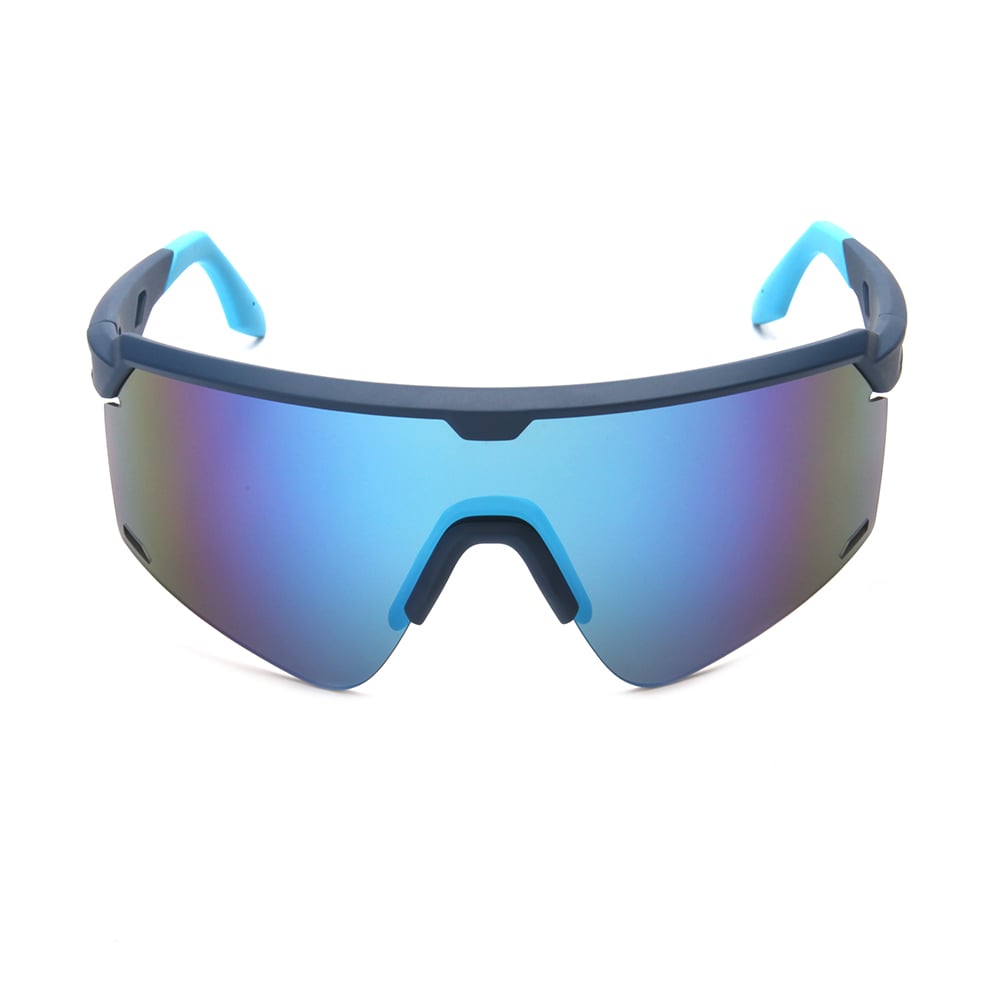
Performance sunglasses with proper lens wrap geometry create a protective barrier against wind, debris, and UV rays while maintaining clear peripheral awareness. Understanding how wrap angle relates to field of view helps you choose eyewear that balances safety, comfort, and athletic functionality. This guide explores the technical relationship between lens wrap, peripheral vision, and practical performance outcomes for running sunglasses, cycling sunglasses, and other demanding sporting applications.
Understanding Lens Wrap and Its Optical Impact
What is Lens Wrap and Why Does It Matter
However, excessive curvature may cause peripheral distortion if lenses are poorly manufactured. Choosing well-designed performance sunglasses ensures a balance between optical clarity, coverage, and comfort.
How Wrap Angle Relates to Peripheral Field of View
Peripheral vision—what you see to the sides while looking straight ahead—represents a crucial safety and performance metric for athletes. Peripheral vision allows athletes to detect movement and obstacles outside their direct line of sight. Running sunglasses and cycling sunglasses should maintain adequate peripheral awareness while providing suitable facial coverage and UV protection. The relationship between lens wrap and peripheral vision depends on the complete optical design. Greater wraparound coverage may improve side protection, but peripheral clarity depends on lens geometry, base curve, optical compensation, and viewing position. Excessive curvature without appropriate optical correction may introduce visual distortion.
Peripheral vision depends on how wrap angle works with base curve, lens design, frame fit, and facial geometry. Greater wrap can improve side coverage, but may create optical challenges if the lens design and viewing position are unsuitable. Angle alone cannot predict distortion. Manufacturers should assess lens geometry, optical compensation, and assembled positioning to verify peripheral clarity.
Technical Factors That Influence Peripheral Vision Quality
Aspheric Lens Design and Edge Clarity
Aspheric lenses have surface curvature that varies across the lens, helping manage optical aberrations in complex designs. Their effectiveness depends on the lens prescription, surface design, base curve, wrap angle, and viewing position. Running and cycling sunglasses should be optically evaluated to confirm peripheral clarity across the intended lens geometry.
For aspheric optics, lens surface design, base curve, wrap angle, and optical positioning must work together to manage aberrations. Optical compensation may reduce distortion from curved lenses, but results depend on the complete specification and manufacturing accuracy. Buyers should consider both coverage and verified optical performance when choosing sports eyewear.
Frame Fit and Lens Positioning
Frame fit affects lens performance. Vertex distance—the distance between the eye and lens—along with wrap angle, base curve, and eye alignment influence optical performance. Assess running and cycling sunglasses in their intended position for suitable coverage and clarity.
Face shape and nose bridge anatomy vary widely among athletes. Performance sunglasses manufacturers address this by offering multiple frame sizes and adjustable bridge fits. A proper fit helps position the lenses appropriately relative to the eyes, supporting suitable peripheral vision while avoiding uncomfortable pressure points. Buyers should verify that their chosen sports sunglasses fit securely during high-intensity activities while maintaining clear peripheral awareness on both sides of the forward gaze.
Lens Material and Optical Properties
The material composition of the lens influences how optical performance is managed across different wrap angles and base curves. Modern performance sunglasses commonly use polycarbonate or Trivex materials because of their impact resistance and suitability for sports eyewear. However, optical clarity at peripheral viewing angles depends on more than material selection alone. Refractive index, lens surface geometry, optical design, manufacturing accuracy, and lens positioning all influence how light passes through the peripheral areas. Running sunglasses and cycling sunglasses should therefore be evaluated based on their complete optical design rather than assuming that a particular lens material automatically ensures better peripheral clarity.
Advanced lens coatings can improve certain aspects of lens performance in sports sunglasses, but they do not directly correct geometric optical distortion. Anti-reflective coatings reduce reflections from lens surfaces, while hydrophobic and oleophobic coatings help repel water and oils, making lenses easier to clean during athletic activities. UV protection is determined by the lens's UV-blocking performance rather than its wrap angle or surface coating appearance. Peripheral visual clarity primarily depends on lens geometry, optical design, manufacturing accuracy, and correct positioning. These factors should be evaluated separately when developing performance sunglasses for demanding sports applications.
Practical Peripheral Vision Considerations for Different Sports
Running Sunglasses and Trail Awareness
Running sunglasses must balance protection against sun exposure with the need for peripheral awareness of terrain and surrounding hazards. Trail runners particularly depend on a clear field of view to detect obstacles, elevation changes, and environmental hazards. The appropriate wrap angle depends on frame geometry, lens base curve, optical design, and individual facial structure rather than a universal numerical range. A well-designed combination of wrap geometry and lens optics can provide suitable side coverage while maintaining visual clarity. Athletes should assess peripheral vision and wearing comfort when testing running sunglasses for different trail conditions.
The optimal design for running sunglasses incorporates wrap geometry that extends coverage downward to protect against glare reflecting off light-colored surfaces, while maintaining open peripheral edges to preserve side vision. Athletes testing running sunglasses should verify that they can easily see movements and obstacles to the left and right without rotating their entire head. This level of peripheral vision awareness directly contributes to both safety and running performance during extended outdoor training sessions.
Cycling Sunglasses and Road Safety
Cycling sunglasses face unique peripheral vision demands because cyclists need to monitor traffic, road conditions, and fellow riders while maintaining forward focus. The wrap angle and base curve should be considered together when designing cycling eyewear, as they influence the overall lens geometry and optical performance. Greater wraparound coverage can help protect against wind and debris, but maintaining clear peripheral vision requires appropriate lens design, optical compensation, and accurate assembly. High-performance cycling sunglasses should undergo optical evaluation to verify edge clarity and visual stability across their intended viewing range, particularly during high-speed descents and group riding.
The wrap geometry of cycling sunglasses can influence airflow around the face and lens edges. However, wind protection and fogging performance also depend on ventilation openings, frame construction, wearing position, and environmental conditions. These factors should be evaluated together when developing cycling eyewear. The wrap geometry in cycling sunglasses should channel light protection downward and toward the temples without restricting the upper and side peripheral vision zones where road hazards and traffic typically appear. Cyclists should prioritize models that maintain clear peripheral awareness during regular riding conditions.
FAQ
How does excessive lens wrap negatively affect peripheral vision in sports sunglasses?
High lens wrap angles may introduce optical challenges when the lens geometry and optical design are not properly coordinated. However, distortion or reduced peripheral clarity cannot be determined by wrap angle alone. Base curve, lens surface design, optical compensation, material properties, and lens positioning all influence the final visual performance. An unsuitable frame fit may also affect the wearer's viewing experience. Performance sunglasses should balance facial coverage with verified optical clarity rather than maximizing wrap angle without considering the complete lens design.
What is the ideal wrap angle for running sunglasses and cycling sunglasses?
There is no single ideal wrap angle that applies to all running sunglasses and cycling sunglasses. The appropriate design depends on the intended sports application, frame geometry, lens base curve, optical design, and individual facial structure. Running eyewear may prioritize a balance between facial coverage and an unobstructed field of view, while cycling eyewear may require additional side coverage against wind and debris. Buyers should evaluate both fit and peripheral visual clarity when testing sports sunglasses under realistic wearing conditions rather than relying on a universal angle specification.



