
 EN
Performance Requirements Behind the Development of Sports and Outdoor Eyewear
What keeps sports eyewear stable at speed? Weight, coverage, grip & geometry—backed by TR90, titanium & fatigue testing. Get the spec guide.
Reading Performance Requirements Before a Frame Is Drawn
Sports and outdoor eyewear is judged under conditions that flatter nothing. A frame that feels fine in a showroom has to stay put at speed, resist sweat and movement, hold optical quality in shifting light and survive being pushed into a kit bag. That is why development starts from performance requirements rather than styling.
Performance requirements are simply the conditions the product must meet to do its job. In sports and outdoor eyewear they cover weight, stability during movement, coverage, lens behaviour, grip over long wear and the structural integrity that keeps a frame aligned. Each translates into a material, geometry or assembly decision.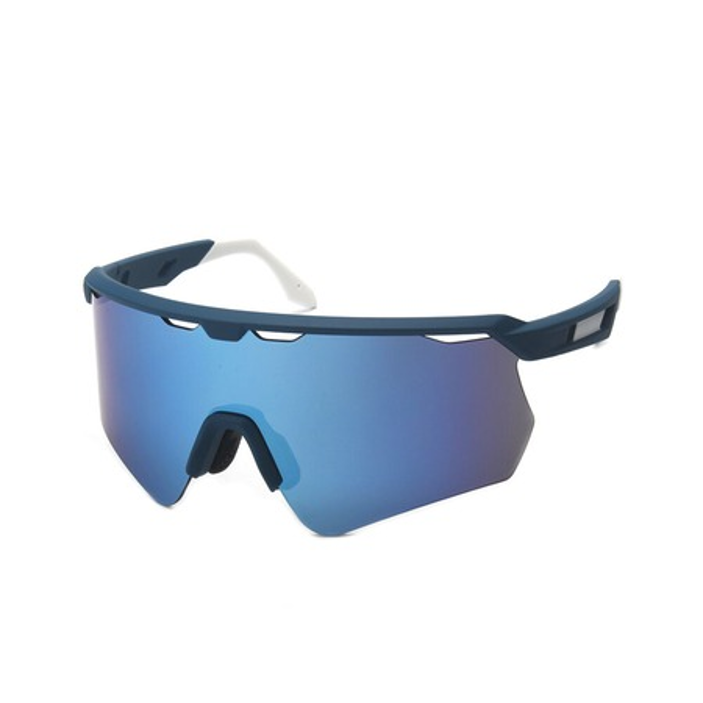
Framing Requirements Before Design
In sports and outdoor eyewear, stability, lightness and coverage only become useful when expressed as constraints a factory can engineer against.
Lightweight Material Selection
Weight is one of the first variables a wearer notices, because it affects comfort, balance and how long a frame can be worn without pressure points. TR90 and moulded constructions are widely chosen for active products because they combine low weight with elastic memory, letting a frame flex and return to shape.
Acetate and metal are not excluded, but they behave differently. Acetate brings colour depth while requiring attention to heat stability, and metal or titanium brings strength in thin profiles while demanding tight welding and finish control. The material decision should follow the activity rather than the styling trend.
Frame Structure and Stability in Sports and Outdoor Eyewear
Structure is what keeps a frame from twisting, slipping or shifting while the wearer moves. Torsional rigidity in the front, controlled flex in the temples and a wraparound geometry that follows the face together decide whether the product stays aligned during running, riding or any activity involving repeated motion.
Stability is a structural outcome rather than a styling one. A frame can be shaped like a sports product and still move on the face if the geometry does not distribute contact correctly. Engineers therefore treat front curve, temple angle and the connection between them as a single load-bearing structure.
Coverage and Lens Options
Coverage is about more than field of view, although that matters. A wrap that follows the brow and cheek reduces stray light and wind reaching the eye, and it changes the lens curve the factory has to work with.
Lens options should therefore be decided alongside frame geometry. Polarised lenses manage glare, UV-protection lenses are commonly specified, and tint depth and mirror coatings change how the product performs visually. Protection levels or impact ratings should never be stated unless they have been verified for that product. Accuracy belongs to the specification.
Grip, Fit and Retention
Coverage and lenses only help if the frame stays where it is meant to sit.
Temple Design and Retention
Temples carry much of the responsibility for retention. Their length, curvature behind the ear and the material used at the tip all influence whether a frame stays seated during movement or gradually slides forward. A temple that grips too firmly becomes uncomfortable, while one that grips too little turns every glance into an adjustment.
Active products often use a slight inward curve and a tip material chosen for friction rather than appearance, so retention is passive and the wearer does not have to think about the frame. Passive retention is what separates a performance frame from a stylish one.
Nose Grip and Pressure Distribution
The nose is where comfort and stability are won or lost. Pads and bridge geometry decide how weight is distributed and whether a frame holds position without pinching. Depending on the model, active eyewear may use adjustable or rubberised contact points so the fit can be tuned rather than fixed.
Pressure distribution is a design problem rather than a parts problem. Weight carried on a small area becomes uncomfortable quickly, so spreading load across the bridge and temples keeps a light frame feeling light over hours. This is where geometry and material choice meet, and where a controlled process produces repeatable comfort.
Fitting Across Faces and Activities
No single geometry suits every face, so fit has to be planned across a range. Head width, bridge shape, temple length and the amount of movement in a given sport all shift what comfortable means, and an outdoor collection needs more than one size or shape to serve its market.
Grading a fit is a manufacturing task. It requires the tooling and inspection discipline to reproduce several geometries consistently rather than scaling one design by eye. When that discipline holds, fit disappears from the customer's mind.
Consistency Through Quality Control
A single strong sample proves nothing, because every unit of sports and outdoor eyewear has to behave like the approved one.
Incoming Material Control
Quality starts before production. Incoming inspection checks materials and components as they arrive, so a bad batch of acetate, a mis-specified lens or an out-of-tolerance part is caught at intake. For sports eyewear this protects the properties the design depends on, such as weight, flexibility and tint.
The check matters because faults introduced upstream are expensive to find later. A component that is slightly wrong can pass a visual glance and still throw off the assembled frame, especially where tight geometry and lens fit are involved.
In-Process Checks
In-process inspection happens during key production and assembly stages, while the product is on the line. This is where geometry, lens seating and surface quality are confirmed before a frame is finished, which is far cheaper than correcting a batch after packing.
For sports eyewear the focus sits on front and temple stability, lens alignment within the rim, and the cleanliness of joints and finish. Geometry checks confirm the frame still matches the approved design as it moves through production, and documented checks let a factory explain where a problem would be caught.
Final Inspection and Sample Match
Final inspection checks finished eyewear before packing. For performance products it is the last guard against a batch that drifted from the approved sample, comparing colour, finish, geometry and lens behaviour against the standard so variability is identified before the goods ship.
Consistency between sample and bulk is what the whole system is built to protect. If a reorder arrives with a different tint, a slightly different flex or a looser hinge, the performance the customer bought has quietly changed. Three stages together give a chain of control rather than a single checkpoint.
Separating Sport From General Outdoor
Not every outdoor customer is an athlete, and not every activity needs the same frame.
Different Briefs for Different Activities
A general outdoor product supports walking, travel and everyday wear, where comfort and versatility matter more than stability. A sport-specific product supports sustained movement, where retention, coverage and weight become the governing requirements. The two briefs should be written separately even when the products share a design language.
Blurring them produces eyewear that is over-built for casual use and under-specified for real activity. Writing the brief around the activity lets the factory match material, geometry and lens to a clear purpose, and it gives the brand a defensible reason for each product's position in the range.
Sustainable Options for Performance Frames
Performance frames are increasingly expected to consider material impact as well as function. Recycled and lower-impact options exist for qualified projects, and one outcome of the material collaboration is CARBONITE, a recycled composite developed for strength and durability in performance-driven frames.
The practical point is that sustainability should be specified like any other requirement, with documentation to match. A brand should agree what is being used, how it is verified and what supporting documents travel with the order, and confirm availability for the product in question rather than treating the claim as an afterthought.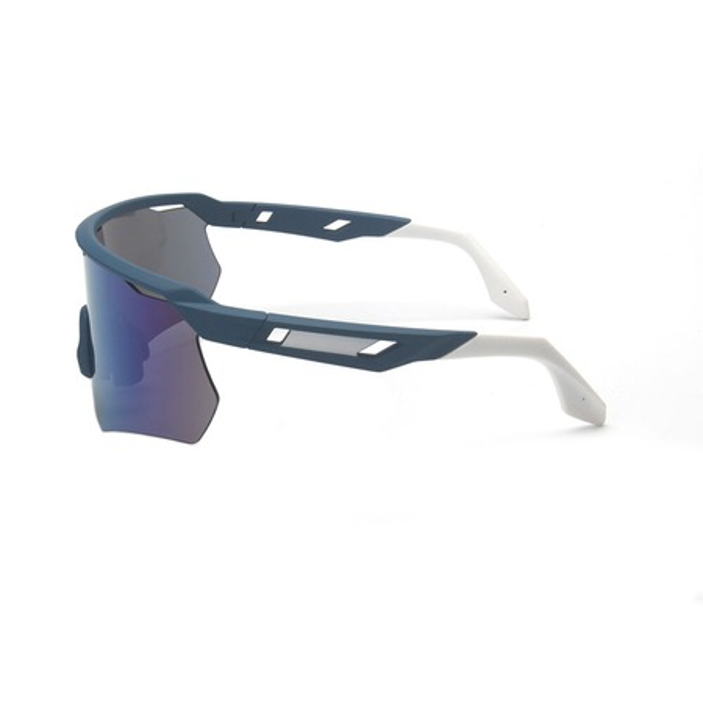
Frequently Asked Questions
What performance requirements matter most in sports eyewear?
The core requirements are weight, stability during movement, coverage, lens behaviour, grip and long-wear comfort. Each has to be expressed as a measurable need so the factory can engineer against it. A light frame that shifts on the face fails, and a stable frame that presses on the nose also fails, so the priorities are set by the activity.
Which materials are used in lightweight sports eyewear?
TR90 and moulded constructions are common because they combine very low weight with elastic memory, letting a frame flex and return to shape. Metal and titanium appear where thin, strong rims are wanted, and mixed designs combine a rigid front with lighter temples. Acetate still has a place in colour-led lines but needs attention to stability.
How does a factory check frame stability during development?
Stability is checked through geometry control and fatigue testing. A fatigue tester confirms that hinges and joints survive repeated folding, while geometry checks confirm the front and temples still match the approved design after handling and assembly. The deeper check is process control, since stability depends on tooling accuracy and consistent assembly.



