
 EN
Impact Rated Lens Materials Used in Sports Sunglasses: Key Differences and Selection Factors
Learn impact rated lens materials for sports sunglasses. Compare polycarbonate & Trivex, check ANSI standards, optical clarity, UV400 protection for outdoor athletic eye safety.
Choosing the right lens material for sports sunglasses is one of the most critical decisions athletes and outdoor enthusiasts face. The lens material directly affects optical clarity, durability, impact resistance, and long-term eye protection during high-intensity activities. Impact rated lens materials are specifically engineered to withstand the demands of rigorous sports environments, where falling debris, accidental collisions, and environmental stress are genuine concerns. Understanding the distinctions between available materials empowers users to select eyewear that matches their specific athletic needs and performance requirements.
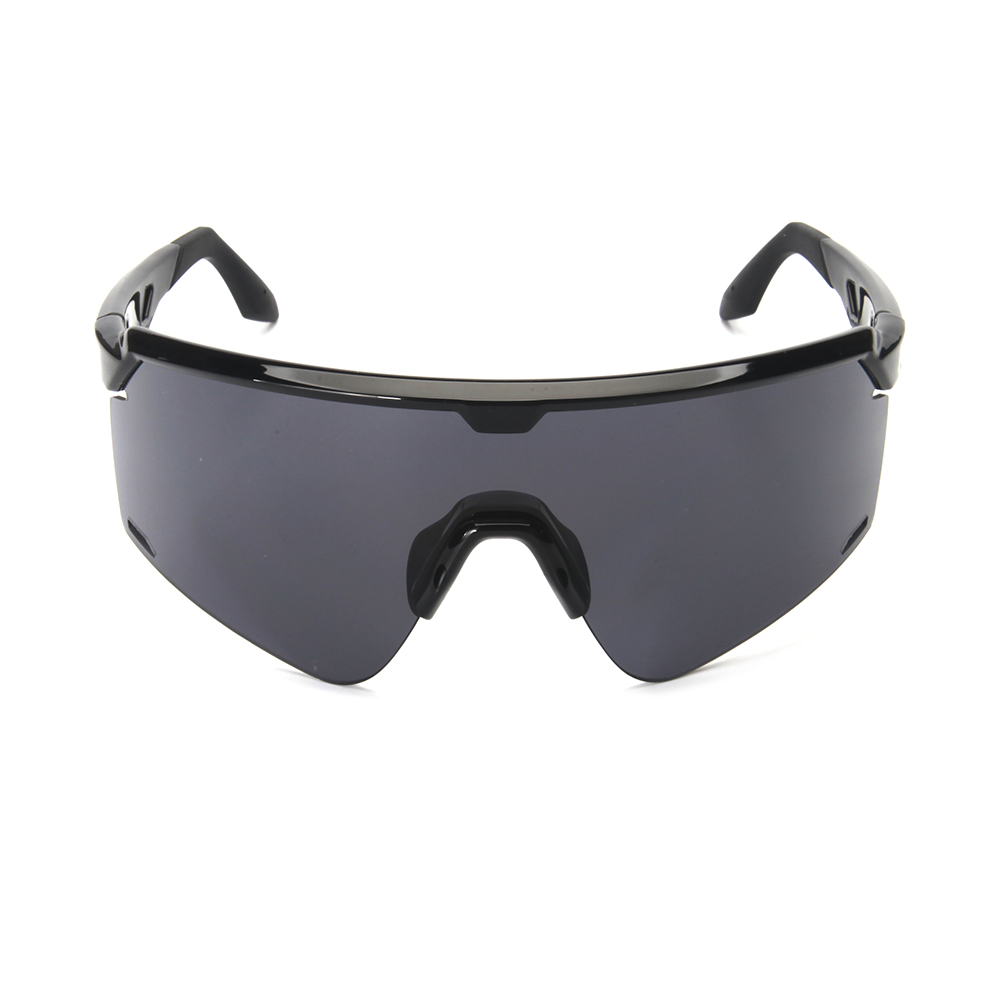
Impact resistance requirements vary depending on the intended use of the eyewear and the applicable product standards or regulations. General-purpose sunglasses, occupational eye protection, and specialized sports protective eyewear may be subject to different testing methods and performance requirements. Running sunglasses and cycling sunglasses should be evaluated according to their intended applications, lens specifications, and overall product construction. Selecting impact-resistant lens materials is an important starting point, but the protective performance of finished eyewear must be verified through appropriate product-level testing.
Understanding Impact Rated Lens Materials
Polycarbonate Lenses for Sports Sunglasses
Polycarbonate is a widely used lens material for sports sunglasses because of its lightweight characteristics and high impact resistance. This thermoplastic material offers a combination of durability and suitability for active eyewear applications. Polycarbonate also generally provides good ultraviolet protection, although the UV performance of finished lenses should be confirmed through appropriate testing rather than assumed from the material alone. Its optical properties and manufacturing flexibility make it suitable for running sunglasses, cycling sunglasses, trail running, and mountain biking applications.
Polycarbonate lenses are commonly used in running sunglasses because they combine lightweight construction with impact resistance. Cycling sunglasses can also benefit from the material's suitability for curved lens designs and sports-oriented frame structures. However, optical performance depends on lens geometry, manufacturing accuracy, and the complete eyewear design. Although polycarbonate is a popular choice for sports applications, material selection should consider the intended activity, optical requirements, product construction, and applicable impact testing rather than treating it as the universal choice for all athletes.
Trivex and High-Index Materials
Trivex and high-index lenses may involve different material and manufacturing costs depending on the specific product. Trivex may be considered for its combination of lightweight construction and impact resistance, while high-index materials are primarily selected to reduce lens thickness for certain prescriptions. Their suitability should be evaluated according to individual optical and performance requirements.
Performance Characteristics and Selection Criteria
Optical Clarity and Vision Performance
Optical quality directly influences athletic performance by determining how clearly and accurately athletes perceive environmental details during activity. Sports sunglasses with superior optical clarity reduce eye strain during extended wear, enhancing comfort during long training sessions or competitive events. Running sunglasses and cycling sunglasses both demand minimal optical distortion because athletes rely on rapid visual processing to navigate terrain and respond to hazards. Lens material can influence optical characteristics such as chromatic aberration and light transmission. However, overall optical quality also depends on lens geometry, surface accuracy, manufacturing precision, and optical design. Manufacturers should evaluate finished lenses through appropriate optical testing rather than assuming that higher-priced materials automatically provide better visual performance.
Polycarbonate and Trivex are both used in sports eyewear, but optical performance depends on lens design and manufacturing quality. Neither guarantees superior edge clarity or color fidelity. Anti-reflective coatings reduce surface reflections, while proper optical design remains essential. Evaluate clarity and distortion across the full lens field.
Durability and Scratch Resistance
Impact-resistant sports sunglasses must withstand both impact-related requirements and everyday wear, including abrasion from dust, sand, and cleaning procedures. Polycarbonate and Trivex are lightweight, impact-resistant lens materials, but both can be susceptible to surface scratches. Scratch-resistant coatings can help improve surface durability and protect lenses during regular use. Oleophobic treatments serve a different purpose by reducing oil and fingerprint residue. Manufacturers should evaluate impact resistance and scratch resistance as separate performance characteristics when selecting lens materials and coatings.
Clean performance sunglasses with microfiber cloths and lens-specific solutions; avoid shirt fabric and paper products that may scratch lenses. Protective cases help prevent transport damage. Hydrophobic coatings can help water and sweat move off lens surfaces, but their durability depends on composition, application, and resistance to cleaning and environmental exposure. Manufacturers should verify performance through durability testing under their intended use conditions.
Impact Testing Standards and Certification
ANSI Z87.1 and FDA Compliance Requirements
Different eyewear standards and regulations address different product categories and intended uses. ANSI/ISEA Z87.1 primarily covers occupational and educational eye and face protection, while ANSI Z80.3 and ISO 12312-1 address general-purpose sunglasses. These standards should not be presented as universal certification requirements for specialized sports protective eyewear. ASTM F803 addresses eye protectors for specific sports listed within its scope and should only be referenced when the product and intended activity fall within the applicable requirements. In the United States, FDA 21 CFR 801.410 establishes impact resistance requirements for applicable spectacle and sunglass lenses. It is a regulatory requirement rather than a general FDA certification for sports sunglasses. Manufacturers should identify the relevant standard or regulation according to the product's intended use and target market.
Impact testing methods vary according to the applicable standard or regulation. FDA 21 CFR 801.410 includes a Drop Ball Test in which a steel ball is dropped from a specified height onto the lens to evaluate its impact resistance. This method should not be confused with the impact testing specified for specialized sports protective eyewear under standards such as ASTM F803, which includes requirements for particular sports and product configurations. Passing a lens-level Drop Ball Test does not establish that an entire pair of sports sunglasses can withstand high-velocity projectile impacts. Product-level performance also depends on lens thickness, lens retention, frame construction, and overall design. Manufacturers should identify the actual test method and scope before making impact protection or certification claims.
Real-World Durability Scenarios
Laboratory impact testing evaluates eyewear under defined conditions, while real-world athletic environments involve different types of potential hazards. Running sunglasses may encounter dust, branches, sports equipment, or accidental contact, while cycling sunglasses may be exposed to gravel, road debris, and impacts during falls. Lens thickness, lens retention, frame construction, and overall product geometry all influence how finished eyewear performs under impact. Manufacturers should avoid assuming that laboratory results cover every real-world scenario and should clearly define the intended protection level of each product.
Athlete feedback and product testing can provide useful information about the durability and wearing performance of sports sunglasses. However, material properties and laboratory test results should not be interpreted as guarantees against eye injuries in real-world activities. Polycarbonate and Trivex offer impact-resistant lens options, but the protective performance of finished eyewear also depends on lens retention, frame construction, and applicable product-level testing. Manufacturers should communicate verified product capabilities accurately and avoid making unsupported claims about injury prevention.
FAQ
Why is polycarbonate widely used in sports sunglasses?
Polycarbonate is widely used in sports sunglasses because it combines lightweight construction, impact resistance, and cost-effectiveness. It is suitable for many running sunglasses and cycling sunglasses applications. Polycarbonate also generally offers good UV protection, but the final lens should be tested to verify its UV-blocking performance. Its suitability for sports eyewear should be evaluated through the applicable impact testing and finished-product specifications rather than material properties alone.
How do Trivex lenses compare to polycarbonate for performance sunglasses?
Trivex and polycarbonate are both lightweight lens materials with high impact resistance and are commonly used in sports eyewear. Their optical characteristics, weight, cost, and suitability may vary depending on the specific product design. Neither material should be assumed to have superior scratch resistance without supporting test data, as both can benefit from scratch-resistant coatings. Buyers should compare verified optical performance, impact test results, prescription requirements, and overall product specifications when choosing between them.
Are impact rated lenses necessary for casual running sunglasses or only for competitive cycling sunglasses?
The need for impact-tested eyewear depends on the intended activity and potential exposure to hazards. Running sunglasses and cycling sunglasses may encounter different levels of environmental debris and accidental impact risks depending on the activity and conditions. Buyers should distinguish between general-purpose sunglasses and specialized sports protective eyewear when evaluating product specifications. Where additional impact protection is required, the finished eyewear should be tested against a standard applicable to the intended sport and product category. Material selection alone does not establish the protection level of the complete eyewear.



