
 EN
Quality Control Challenges in Sports and Outdoor Eyewear Production
Struggling with lens distortion, hinge failure, or wrapframe gaps in sports eyewear? Discover the 7 non-negotiable QC checks that prevent costly returns.
Why Sports and Outdoor Frames Fail Differently
Sports and outdoor eyewear rarely fails in a comfortable office. It fails on a descent, after months in a helmet bag, or after repeated folding of the frame. A product that looks clean on a display stand can still hide lens distortion, a hinge that loosens after cycles, or a wraparound front that twists just enough to open a gap between lens and rim.
That reality shapes every quality decision a sports eyewear manufacturer makes. Buyers sourcing for active-lifestyle brands are not paying for appearance alone; they are paying for repeatable structure that survives demanding use. The controls that deliver it are ordinary ones applied with unusual discipline, from incoming inspection of lenses to final checks on assembled sports eyewear.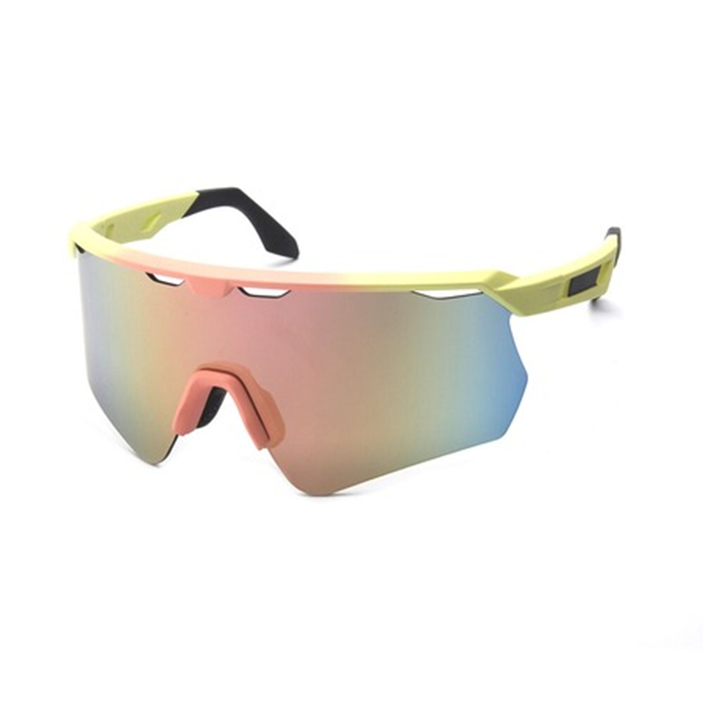
Lens Quality Under Demanding Use
Outdoor use amplifies every small flaw in sports eyewear, because the eye uses the edge of a curved lens as much as the centre.
Uniformity Across the Whole Aperture
A sports lens is typically larger and more steeply curved than a dress-frame lens, so small variations in thickness or tint spread across a wider visible area. Uniformity is not one reading at the optical centre. It is a check across the full aperture, because a wearer turning their head sees through the rim region.
A lens that measures well at one point and drifts near the edge is the practical risk. In a wraparound design that edge is exactly what the eye uses during a quick glance, so catching the drift before assembly keeps one lens problem from becoming a finished-goods problem later.
Polarised Consistency and Transmission
Polarised sports eyewear depends on a film that must be oriented and bonded consistently. If the polarising layer is stretched or misaligned, the wearer notices uneven darkening, a visible seam, or a patch that behaves differently from the rest of the lens.
The challenge grows with curved, large-aperture lenses, where stress can show as haze or a shift in appearance once the lens is fitted. Verifying at incoming inspection and again after assembly, rather than at a single stage, keeps the finished part within the agreed visual standard across a batch.
Power, Haze and Stress Verification
Where a sports lens carries a defined power, the reading is verified with an automatic lensmeter on supplied lenses and again after mounting, so the result is confirmed. A stress tester reveals internal stress that can make a lens behave unpredictably over time.
Haze is a separate consideration. A lens can be dimensionally correct and still scatter light enough to dull contrast in low-light conditions, so a haze meter compares output against an approved sample and keeps it inside an agreed range. Stress and haze rarely appear alone, and reviewing them together helps engineering adjust the process.
Frame Strength and Geometry in Wrap Designs
Wraparound frames are asked to hold shape under loads a dress frame never meets.
Wraparound Geometry and Assembly Precision
A wrap design creates a specific assembly problem. The front curves around the face, the lens sits on a compound curve, and the rim must close around it without gaps or pinch points. Small errors in rim radius or lens edge show as a visible gap along the top of the lens, where the curve is strongest.
A frame tracer captures shape and dimensional data so the front and the supplied lens are matched to the intended geometry. Assembly precision also affects feel: if the two temples sit at slightly different angles, the frame rocks on the face, which in-process inspection catches before the product is packed.
Impact Testing as a Screening Tool
Impact resistance is one of the most misunderstood areas in the category. A drop ball impact tester allows a controlled strike on a lens so the team can assess how that lens responds under a defined condition. It is a comparison and screening tool, not a guarantee of performance in every real-world situation.
No test can promise that a lens survives every stone, branch or fall, because materials behave differently at different temperatures and thicknesses. What the test does provide is evidence when a design or material change is proposed, so engineering can see whether the change is neutral, better or worse before it reaches bulk.
Frame Fatigue and Repeated Flex
Sports frames flex. Temples open and close, hinges rotate, and the front is pushed and pulled during use. A frame fatigue tester applies repeated cycling so the team can observe how a hinge, temple or joint behaves over many cycles rather than in a single moment.
Fatigue is where weak points surface slowly. A hinge that feels tight on day one can loosen gradually if the pin, barrel or screw is not matched to the load, and metal-on-metal joints age differently from acetate ones. Reading the test in the context of the actual construction is what makes it useful.
Hinge, Temple and Finish Consistency
The parts a wearer touches and sees every day are the hardest to keep uniform across a run of sports eyewear.
Hinge Durability Under Cycling
A hinge is a small assembly carrying a large share of the daily load. Barrel hinges, spring hinges and screw-in constructions each fail differently: a loose barrel lets the temple wobble, a weak spring loses its return, and a stripped screw opening ends the frame's life early.
Because hinge performance depends on how temple, endpiece and component work together, material specification and assembly method have to be reviewed as a system. A strong hinge in a mismatched endpiece still fails, which is a lesson many programmes learn late and at the cost of a return batch.
Temple Stress, Grip and Colour Match
Temples carry bending stress whenever a frame is put on or taken off, and in sports eyewear they are often thinner and longer while the frame may be worn with a helmet. If a frame is specified for a broad range of head widths, the temples must tolerate that spread without cracking or losing shape.
Colour and finish complete the picture. A controlled lighting cabinet lets the frame be compared against an approved reference, while finish is inspected on the assembled frame rather than the raw part, because an unevenly polished front shows a dull patch near the endpiece even when the colour matches perfectly.
Inspection Discipline
Testing equipment matters only when it sits inside a routine that has defined stages and records.
Incoming and In-Process Checks
Incoming inspection happens before production begins and covers lenses, hinges, screws, core wire, acetate sheets, metal parts and pellets, each checked against specification as it arrives. A hinge out of tolerance will not be rescued by good assembly, and an off-spec lens cannot be corrected by careful fitting.
In-process inspection covers the key production and assembly stages, where a small deviation multiplies. For sports eyewear the critical points sit around lens fitting and frame alignment, because a wraparound front hides nothing. Inspection points are defined per product, so a metal frame and a moulded one are not judged by identical steps.
Final Inspection Before Packing
Final inspection is the last controlled moment before the product leaves the factory. Finished eyewear is checked for lens quality, frame alignment, hinge function, colour, finish and general workmanship, and anything that fails is caught while it can still be reworked or replaced.
The stage also confirms retail readiness, including logo application, temple markings and packaging components, so the piece that arrives matches the approved sample. No routine removes every risk, but disciplined inspection makes the outcome predictable and the evidence traceable, which is what a buyer needs in order to plan.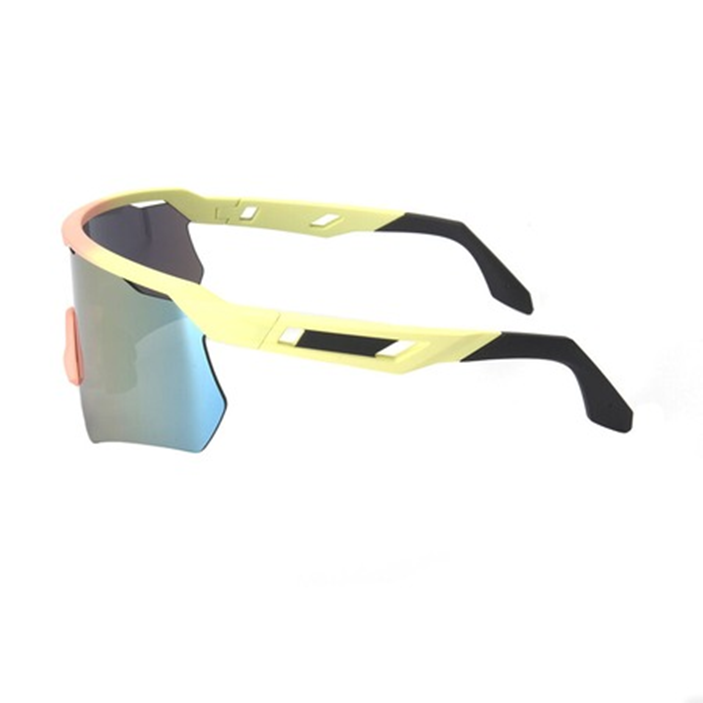
Frequently Asked Questions
Why is quality control harder for sports eyewear than for everyday frames?
Sports eyewear is worn under conditions that expose every weakness: movement, sweat, heat, cold, dust and impact. Lenses are larger and more curved, so optical uniformity is harder to hold across the surface, while lighter frames mean hinge and temple stress show up sooner. A wraparound front leaves almost no room to hide an assembly error, and a failure during activity costs more than an annoyance.
How do you check lens uniformity without making unsupported claims?
Uniformity is treated as a measured property rather than a marketing promise. A uniformity tester, a haze meter and an automatic lensmeter compare a produced lens against an approved specification and sample. The result describes what the lens does in a defined test; it does not claim identical performance in every real-world condition, which is the honest basis for a buyer conversation.
What does frame fatigue testing tell a buyer?
A fatigue tester applies repeated opening and closing cycles so the team can observe how hinges, temples and joints behave over time. A single fold tells almost nothing, while many cycles reveal whether a hinge loosens, a temple tip deforms or a joint develops play. For a buyer the value is comparison between designs, not a certificate.



