
 EN
Weld Line Weakness in Injection Molded TR90 Eyewear Frames: Quality Control in Production
Discover proven QC strategies—mold design, parameter tuning & annealing—to eliminate weld line weakness. Download the quality control guide.
Weld line weakness represents one of the most significant quality challenges in injection molded TR90 eyewear frames. When plastic flows around mold obstacles or meets after traveling different paths within the cavity, these convergence zones create structural vulnerabilities that directly compromise frame durability and customer satisfaction. Understanding the mechanics of weld line formation and implementing robust quality control measures are essential for manufacturers committed to delivering reliable TR90 frames that meet both aesthetic and functional standards.
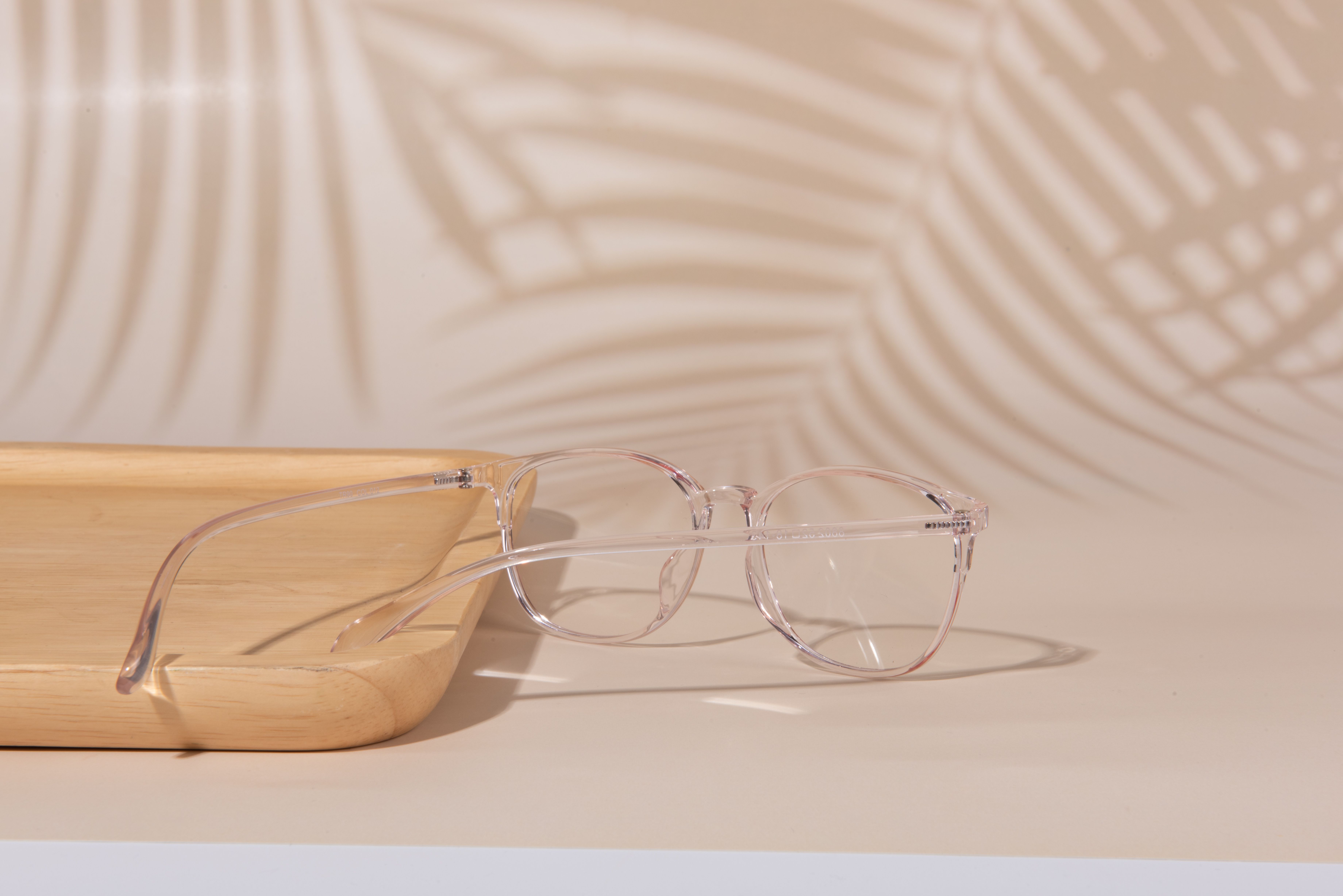
TR90 material, valued for its lightweight and flexible properties, presents unique processing challenges during injection molding. The combination of molecular chain alignment, cooling rates, and flow pattern complexities in TR90 frames creates conditions where weld lines become particularly prone to weakness. Production environments demand sophisticated monitoring and preventive strategies to ensure that flexible glasses manufactured with this material achieve consistent structural integrity throughout their service life.
Understanding Weld Line Formation in Memory Plastic Eyewear
How Weld Lines Develop During Injection Molding
Weld lines form when separate plastic flow fronts converge and rejoin during the injection molding process. In TR90 frames, this occurs most commonly around bridge sections, hinge bosses, and nose pad attachment points where mold geometry forces the material to split and recombine. The molecular chains at these convergence zones do not interweave completely, creating a plane of weakness that runs perpendicular to the flow direction. Unlike homogeneous material regions where molecular bonds form randomly in all directions, weld line areas exhibit significantly reduced tensile strength and impact resistance.
Material Properties and Weld Line Susceptibility
Memory plastic eyewear compositions, particularly TR90, display heightened sensitivity to weld line degradation compared to standard polycarbonate or acetate frames. The thermoplastic nature of memory plastic means that molecular chains possess greater freedom of movement during processing, yet this same characteristic makes it more difficult for chains to properly align and bond across weld zones. Temperature fluctuations, injection speed variations, and cooling cycle timing all influence the degree of molecular reintegration at weld interfaces. Even minor deviations in processing parameters can amplify weakness at these critical junctures, making precise control essential for maintaining frame quality.
Quality Control Strategies for TR90 Frame Manufacturing
Mold Design Optimization
Strategic mold design serves as the first line of defense against severe weld line weakness in TR90 eyewear production. Manufacturers can redirect flow paths using runner placement, gate positioning, and cavity geometry modifications to minimize unavoidable weld zones or position them in non-critical structural areas. Incorporating multiple gates on larger frame sections allows plastic to approach from different angles, creating less distinct flow fronts that rejoin more smoothly. Some advanced mold designs use flow channels and restrictive elements that encourage more parallel material flow, reducing the number of high-impact convergence zones where flexible glasses experience critical weakness.
Process Parameter Calibration
Temperature control during injection molding directly determines whether weld lines in TR90 frames strengthen or fail prematurely. Maintaining mold temperatures between 60 and 80 degrees Celsius promotes molecular flow and reintegration at weld zones without degrading the material. Injection speed optimization prevents premature cooling that locks weld defects in place while avoiding excessive pressure that distorts frame geometry. Holding pressure and cooling time sequences must be tuned specifically for tr90 frames since the material cools faster than traditional plastics yet requires sufficient time for molecular chains to achieve reasonable bonding across weld interfaces. Manufacturers implementing real-time sensor monitoring can detect temperature drift and adjust parameters before producing defective parts.
Post-Molding Treatment and Testing
Heat treatment of completed TR90 frames can partially restore weld line strength by allowing molecular chains additional time to migrate and reorganize across weakness zones. Controlled annealing at 80 to 100 degrees Celsius for 30 to 60 minutes improves dimensional stability and enhances bonding at weld sites. Destructive and non-destructive testing protocols must specifically evaluate weld line integrity rather than only measuring overall frame strength. Ultrasonic scanning, dye penetrant inspection, and targeted tensile testing of frame sections containing known weld zones provide early identification of defective memory plastic eyewear batches before distribution. Statistical tracking of failure patterns enables root cause analysis and continuous process refinement.
Managing Weld Line Impact on Frame Performance
Critical Locations and Failure Patterns
In TR90 eyewear, certain frame regions face higher weld line vulnerability due to the stress concentrations they experience during use and handling. Bridge sections endure continuous bending as frames rest on the nose, making weld weakness in this area a leading cause of frame fracture. Hinge bosses represent another critical zone where multiple flow paths converge, and premature hinge failure often traces directly to inadequate weld bonding. Temple joining points and nose pad bosses experience concentrated stress from adjustment, cleaning, and repeated wearing cycles. Understanding these high-risk locations guides both design modifications and testing focus, ensuring that TR90 eyewear producers concentrate quality resources where failure consequences matter most.
Preventive Design Approaches
Frame designers working with flexible glasses can proactively minimize weld line impact through geometric strategies that avoid placing weak zones in high-stress locations. Rounded transitions instead of sharp corners distribute stresses more evenly and reduce localized weakness. Thickened sections at known weld line areas compensate for reduced material properties by providing additional material volume through which stress distributes. Incorporating ribs and reinforcement channels that run perpendicular to likely flow directions can bridge across weld zones and provide backup strength paths. When weld lines become inevitable in TR90 frames, strategic placement in low-stress regions where they cause minimal performance degradation represents a pragmatic manufacturing tradeoff that maintains overall frame reliability.
FAQ
What causes weld lines to form in TR90 frames during injection molding?
Weld lines develop when plastic flow fronts traveling through the mold cavity meet and rejoin after being separated by obstacles or mold geometry. In TR90 eyewear, mold features like bridge bosses, hinge attachments, and nose pad sections naturally divide the molten plastic flow. The molecular chains at these convergence zones do not fully interweave, creating planes of reduced strength. This is particularly pronounced in memory plastic eyewear because of the thermoplastic nature of TR90 material and its processing characteristics during injection molding.
How can manufacturers test for weld line weakness in flexible glasses before distribution?
Manufacturers employ both destructive and non-destructive testing methods to identify weld line defects in TR90 frames. Ultrasonic scanning detects internal discontinuities at weld zones, while dye penetrant inspection reveals surface-level weakness. Tensile testing of frame sections containing known weld locations provides direct measurements of bonding quality. Statistical failure tracking combined with post-production stress testing allows companies to flag suspect batches before tr90 eyewear reaches customers. Real-time monitoring during molding processes catches parameter drift that would produce weak weld lines.
Can annealing or heat treatment improve weld line strength in TR90 eyewear?
Yes, controlled heat treatment significantly improves weld line integrity in TR90 frames. Annealing at 80 to 100 degrees Celsius for 30 to 60 minutes allows molecular chains additional time to migrate and reorganize across weld interfaces, strengthening the bonds. This post-molding process enhances dimensional stability and overall frame durability for flexible glasses. Many manufacturers of TR90 eyewear incorporate annealing into their quality protocols, finding that the modest time investment during production prevents premature failures and warranty returns related to weld weakness.



