
 EN
Dimensional Shrinkage in Acetate Eyewear After Curing: Prevention Strategies for Eyewear Brands
Discover science-backed strategies to reduce curing shrinkage by 30–40%. Ensure precision, quality, and brand trust—download best practices now.
Dimensional shrinkage in acetate eyewear represents one of the most persistent manufacturing challenges facing eyewear brands today. When acetate frames undergo the curing process, material contraction can occur, leading to fit inconsistencies, optical misalignment, and customer dissatisfaction. Understanding and preventing this shrinkage is critical for maintaining product quality and brand reputation. The issue becomes particularly acute when producing custom acetate designs, where precision directly impacts both aesthetic appeal and functional performance.
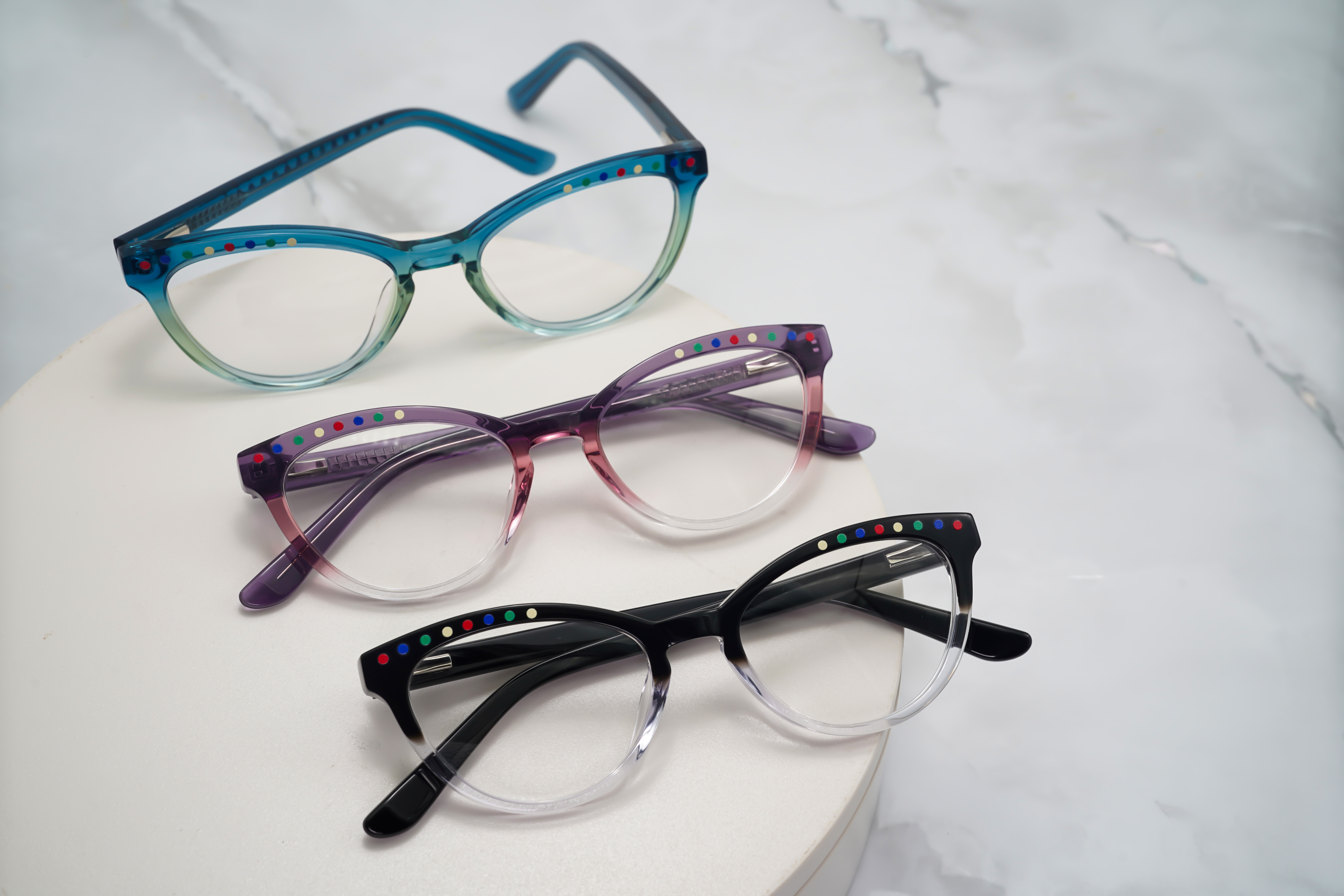
Acetate frames have become the material of choice for premium eyewear production because of their exceptional durability, vibrant color options, and superior optical clarity. However, the post-production curing phase introduces thermal and chemical stress that can cause measurable dimensional changes. Eyewear brands that implement systematic prevention strategies during manufacturing can virtually eliminate shrinkage-related defects and ensure consistent frame dimensions across entire production runs.
Understanding Dimensional Shrinkage in Curing Processes
The Science Behind Acetate Frame Shrinkage
Acetate material undergoes chemical transformation during curing, where residual solvents evaporate and polymer chains realign. This process naturally produces dimensional variance. When acetate frames are heated or exposed to chemical catalysts, moisture and volatile organic compounds escape from the material matrix. The loss of these substances reduces overall material volume, causing frames to contract slightly. Temperature fluctuations during the cooling phase compound this effect, as different regions of the frame cool at different rates.
The severity of shrinkage depends on several factors: the specific acetate compound composition, the thickness of the material, the complexity of the frame geometry, and the duration and intensity of the curing cycle. Handcrafted acetate frames often exhibit more pronounced shrinkage variation because they involve multiple manual processing steps, each introducing slight temperature and humidity variations. Custom acetate designs with intricate patterns or unique shapes face heightened shrinkage risk because material stress concentrates in transitional zones.
Impact on Optical Performance and Fit
Even minor dimensional changes in acetate eyewear can disrupt optical alignment. When frames shrink asymmetrically, lens positioning shifts, affecting prismatic correction and visual comfort. A bridge that shrinks unevenly can cause pressure points on the nose, reducing wear comfort. Temple length reduction alters how frames sit on the ears, potentially causing slippage or excessive pressure. These seemingly small changes accumulate into measurable functional problems that customers notice immediately.
For eyewear brands that guarantee precise optical specifications, shrinkage-induced dimensional drift represents a quality liability. Retailers and distributors expect consistent frame dimensions across inventory, and end-users expect frames to match advertised fit specifications. Any deviation creates warranty claims, returns, and damaged customer relationships.
Proven Prevention Strategies for Acetate Frame Manufacturing
Optimizing Curing Temperature and Duration Control
The most effective shrinkage prevention strategy involves precise control of the curing environment. Rather than rushing curing cycles with high heat, eyewear manufacturers should implement graduated curing protocols that allow acetate frames to stabilize gradually. Slow curing at moderate temperatures minimizes internal stress concentration and reduces the rate of solvent evaporation. This controlled approach takes longer but produces superior dimensional stability.
Modern curing ovens with programmable temperature ramps allow manufacturers to establish custom acetate curing profiles tailored to specific frame designs. The ideal protocol involves an initial low-temperature phase at 40–50°C for 30 minutes to allow initial stabilization, followed by gradual temperature increase to the target curing temperature, then a slow cool-down phase. This multi-stage approach dramatically reduces shrinkage compared to conventional single-temperature curing methods.
Material Selection and Pre-Processing Techniques
Not all acetate formulations shrink equally. Eyewear brands should source acetate frames from suppliers who provide detailed material specifications, including shrinkage rates under standard curing conditions. Premium-grade acetate with lower residual solvent content naturally exhibits less dimensional change. When selecting acetate for custom eyewear production, prioritize suppliers who offer pre-dried or pre-stabilized material.
Pre-curing stabilization represents an underutilized prevention tactic. Before subjecting handcrafted acetate frames to final curing, manufacturers can expose them to ambient humidity chambers for 24–48 hours. This gentle acclimation allows surface moisture to equilibrate with the material interior, reducing the dramatic evaporation that occurs during industrial curing. Several eyewear brands report 30–40% shrinkage reduction using this simple pre-treatment.
Post-Curing Dimensional Verification and Adjustment
Even with optimal curing protocols, some dimensional variation remains inevitable. The solution involves implementing rigorous post-curing measurement protocols. High-precision optical comparators and digital measurement systems can detect shrinkage in acetate eyewear within 0.1 millimeters. Once shrinkage patterns are identified for specific frame designs, manufacturers can adjust tool dimensions or curing parameters to compensate.
Quality control protocols should include random sampling of every production batch. If measurements reveal shrinkage exceeding acceptable tolerances, the batch can be subject to secondary heat-treatment cycles that stabilize dimensions before shipment. This verification step requires investment in measurement equipment but effectively eliminates dimensional drift complaints.
Industry Best Practices for Consistent Frame Quality
Documentation and Standardization Across Production
Eyewear brands producing custom acetate designs must maintain detailed documentation of shrinkage patterns for each frame model. By tracking historical shrinkage data, manufacturers develop predictive models that guide future production adjustments. Some advanced facilities maintain digital shrinkage profiles linked to specific acetate suppliers, curing equipment, and seasonal humidity variations. This data-driven approach eliminates guesswork and ensures consistency across production runs.
Standardization protocols should cover material receiving inspections, pre-curing storage conditions, curing machine maintenance schedules, and post-curing measurement procedures. When all handcrafted acetate production follows identical protocols, shrinkage becomes predictable and controllable rather than random.
Employee Training and Equipment Calibration
Human error contributes significantly to shrinkage variability. Manufacturing staff must understand how temperature adjustments, curing duration changes, and humidity fluctuations affect final frame dimensions. Regular training ensures consistent execution of curing protocols. Equipment calibration is equally critical—curing ovens should be verified monthly to ensure temperature accuracy, and measurement instruments must be calibrated against certified standards.
Eyewear brands that invest in operator training and equipment maintenance consistently achieve superior results compared to facilities that treat curing as a routine step. This commitment to precision demonstrates the seriousness with which manufacturers approach acetate eyewear quality.
FAQ
Why does acetate eyewear shrink during curing?
Acetate undergoes chemical and physical transformation during curing as residual solvents evaporate and polymer chains realign. This natural process reduces material volume, causing dimensional contraction. Temperature fluctuations and uneven cooling further compound shrinkage. Different regions of the frame cool at different rates, creating internal stress that manifests as dimensional drift.
How much shrinkage is acceptable in acetate frames?
Industry standards typically accept shrinkage below 0.3% for acetate eyewear. However, some brands maintain stricter tolerances of 0.1–0.2% to ensure optical precision and fit consistency. The acceptable threshold depends on the specific frame design and intended application. Handcrafted acetate products often require tighter controls than mass-produced designs.
Can shrinkage in acetate eyewear be completely eliminated?
Complete elimination of shrinkage is not realistic because curing represents a fundamental chemical process. However, advanced prevention strategies can reduce shrinkage to negligible levels below 0.1%. Precision curing protocols, pre-stabilization treatments, and post-curing adjustments minimize dimensional drift to the point where it becomes undetectable in finished frames.



