
 EN
Frame Fit Problems in Custom Sunglasses Before Production: Prevention and Quality Control
Discover proven pre-production QC strategies for OEM, branded & promotional eyewear—reduce rework, protect margins, and ensure perfect fit. Download the checklist.
Frame fit problems represent one of the most significant quality challenges in manufacturing custom sunglasses. When frames fail to fit properly on the human face, the entire product fails functionally and aesthetically, regardless of lens quality or design appeal. This issue directly impacts customer satisfaction, return rates, and brand reputation in the competitive eyewear market. Understanding the root causes and implementing preventative quality control measures before production begins is essential for manufacturers of oem sunglasses, promotional sunglasses, and branded sunglasses.
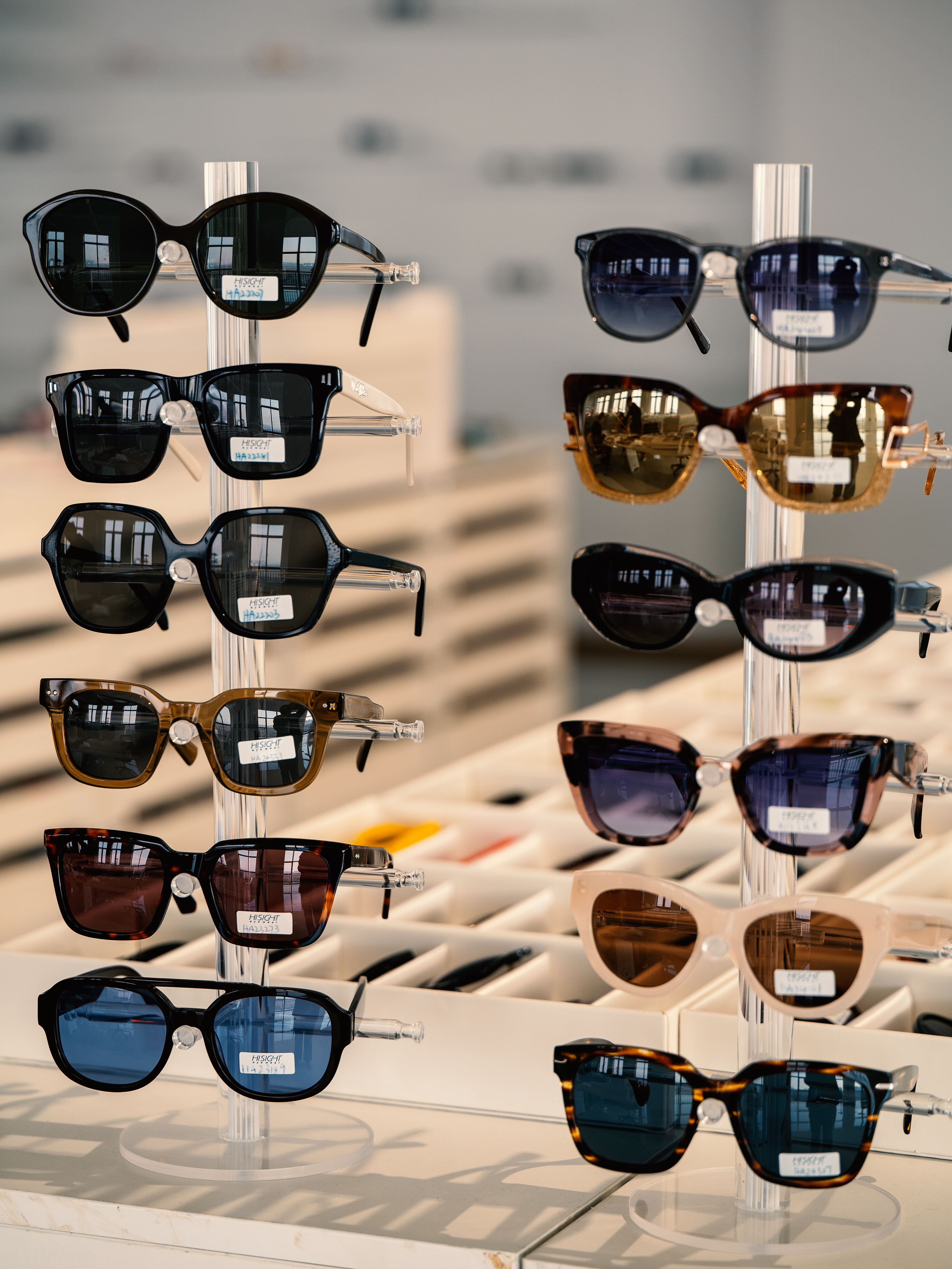
Frame fit complications arise from multiple sources including material inconsistencies, dimensional tolerances, assembly errors, and design specification mismatches. For manufacturers producing promotional sunglasses or branded sunglasses at scale, even minor deviations compound across production batches. Early identification and correction of these issues dramatically reduce waste, rework costs, and delivery delays. This article explores the critical prevention strategies and quality control protocols that ensure every pair of custom sunglasses meets fit standards before they reach customers.
Understanding Frame Fit Issues in Custom Sunglasses Manufacturing
Common Fit Problems in OEM and Branded Sunglasses
Frame fit failures manifest in several distinct ways throughout oem sunglasses production. Bridge width misalignment causes the frame to sit incorrectly on the nose, creating discomfort and asymmetrical lens positioning. Temple length variations result in frames that either slide down excessively or press too tightly against the ears, compromising wearability. Lens positioning errors occur when frame geometry deviates from specifications, altering optical center alignment and peripheral vision quality. For branded sunglasses and promotional sunglasses manufacturers, these issues damage brand credibility and trigger costly returns and replacements.
Additional fit challenges include hinge tension inconsistencies, where temples either snap too easily or resist folding, and bridge flexibility problems that prevent proper frame settling on diverse face shapes. Nose pad positioning and comfort issues arise when custom sunglasses lack adequate adjustment features or when materials feel abrasive or unstable. Large-scale manufacturers of promotional sunglasses must recognize that customers tolerate minimal variance in fit quality, making precision control non-negotiable from the earliest production phases.
Economic Impact of Frame Fit Defects
Frame fit problems generate substantial financial consequences beyond direct replacement costs. Custom sunglasses that fail fit tests after full assembly require complete disassembly, rework, and reinspection, consuming labor resources and extending production timelines. Returns and warranty claims for branded sunglasses diminish profit margins and strain customer service operations. Market reputation damage from poor-fitting oem sunglasses or promotional sunglasses spreads through online reviews and customer networks, directly reducing repeat orders and new customer acquisition. Prevention before production proves far more economical than post-sale remediation.
Pre-Production Quality Control Strategy for Custom Sunglasses
Design Specification Validation and Material Testing
Effective prevention begins with rigorous design specification validation before custom sunglasses enter production. Manufacturers must establish precise dimensional requirements for bridge width, temple length, nose bridge geometry, and hinge positioning based on target demographic face measurements. Material samples from each supplier must undergo fit testing on human models to confirm that materials maintain dimensional stability through injection molding, assembly heating, and normal wear conditions. For oem sunglasses and branded sunglasses, specification documents should include tolerance ranges for each critical dimension, with clear acceptance and rejection criteria.
Testing protocols for promotional sunglasses production should include thermal stability assessment, where frames are exposed to temperature variations to confirm they do not expand, contract, or warp unexpectedly. Material hardness and flexibility testing ensures that frame materials provide proper nose pad compliance while maintaining structural integrity. Hinge mechanism testing through simulated opening and closing cycles validates that tension remains consistent across repeated use. These pre-production tests prevent costly production stops when materials prove unsuitable for achieving proper frame fit.
Tooling and Mold Verification Procedures
Injection mold quality directly determines whether custom sunglasses achieve consistent frame fit across entire production runs. Before tooling receives approval, manufacturers must conduct comprehensive dimensional verification of all mold cavity surfaces against approved specifications. First article samples produced from new molds must undergo complete 3D scanning and comparison against CAD specifications to identify any deviation patterns. For branded sunglasses and oem sunglasses production, dimensional variance must remain within established tolerance bands, typically plus or minus 0.1 to 0.3 millimeters depending on component criticality.
Mold flow simulation software can predict material behavior and potential shrinkage patterns during injection molding, allowing manufacturers to adjust cooling channels and gate locations before physical mold creation. Trial production runs of promotional sunglasses using new molds should produce sample frames tested on multiple human models with varying face proportions to confirm fit adequacy across diverse populations. Any mold imperfections discovered during this phase must be corrected before full-scale production begins, preventing frame fit problems from affecting thousands of units.
In-Process Quality Control During Custom Sunglasses Production
Assembly Checkpoint Testing and Dimensional Inspection
Throughout production, custom sunglasses must pass multiple checkpoint tests ensuring frame fit quality at critical assembly stages. Bridge assembly represents the primary fit-determining step, where quality inspectors measure bridge width, nose pad positioning, and symmetry using precision calipers or automated vision systems. Temple assembly verification confirms that hinge tension falls within acceptable ranges and that temple length dimensions remain consistent batch to batch. For oem sunglasses and branded sunglasses manufacturers, these checks occur before lens installation, allowing defective frames to be sorted and reworked immediately rather than progressing through final assembly.
Automated vision systems enhance inspection speed and accuracy for large-scale promotional sunglasses production, utilizing high-resolution cameras to compare frame geometry against stored reference images. Statistical process control charts track dimensional measurements across shifts and production days, revealing trends that indicate mold wear or material supply changes requiring corrective action. Human fit testing with frames at regular intervals provides qualitative validation that automated measurements correlate with actual wearability, confirming that custom sunglasses fit properly on diverse face shapes.
Random Testing and Statistical Sampling Protocols
Manufacturers must implement statistically rigorous random sampling from each production batch of custom sunglasses to maintain frame fit quality consistency. Sampling frequency should increase when dimensional measurements suggest potential drift, and decrease when data demonstrates sustained compliance with specifications. For branded sunglasses and oem sunglasses batches exceeding defined size thresholds, sampling rates typically range from one percent to five percent depending on historical defect patterns and customer tolerance requirements. Each sampled frame undergoes complete fit testing on human models, dimensional verification, and strength testing before batch approval.
Testing protocols should verify that promotional sunglasses and all custom sunglasses variants achieve proper frame positioning across multiple face sizes and shapes, from petite to large frames. Documentation of all test results creates historical records enabling trend analysis and root cause investigation when fit problems emerge. When sampling detects out-of-specification frames, manufacturers must halt production, investigate the underlying cause, implement correction measures, and reinitiate testing before resuming full-scale manufacturing.
FAQ
What specific measurements must manufacturers check to prevent frame fit problems in custom sunglasses?
Critical measurements include bridge width, temple length, bridge height, nose pad positioning and spacing, hinge tension and alignment, lens opening dimensions, and overall frame geometry symmetry. Each measurement must align with design specifications and fall within established tolerance ranges. For oem sunglasses and branded sunglasses, manufacturers should verify these dimensions at multiple production points, beginning with raw material inspection and continuing through final assembly quality checkpoints.
How often should manufacturers conduct fit testing on promotional sunglasses during production runs?
Fit testing frequency depends on batch size, historical defect rates, and production volume velocity. Manufacturers typically test custom sunglasses samples at start of each shift, after mold or material changes, and at random intervals throughout daily production. For large promotional sunglasses orders, testing may occur every hour or after every one thousand units produced. Statistical process control charts help manufacturers determine optimal testing frequency by identifying periods of consistent compliance versus increased variability requiring more frequent sampling.
Why should dimensional verification occur before production rather than only during manufacturing of branded sunglasses?
Pre-production testing for branded sunglasses, oem sunglasses, and custom sunglasses prevents expensive production stops and rework after thousands of units have been manufactured. Discovering design flaws or material incompatibilities during pre-production validation costs far less than discovering them after full-scale production begins. Early identification allows manufacturers to refine designs, adjust tooling, and select appropriate materials, ensuring that every frame fit perfectly before customer delivery. This approach dramatically reduces waste, preserves timelines, and protects brand reputation.



