
 EN
Quality Control Stages Used by an Eyewear Manufacturer: Manufacturing Considerations for OEM/ODM Projects
Discover the 4 critical quality control stages top eyewear manufacturers use for OEM/ODM projects.Ensure compliance, reduce defects, and boost brand trust. Download QC checklist.
Quality control represents the backbone of reliable eyewear production. An eyewear manufacturer must implement rigorous inspection protocols across every production phase to ensure consistency, durability, and customer satisfaction. Whether operating as an independent optical frame manufacturer or as part of a larger OEM/ODM ecosystem, quality assurance directly impacts brand reputation and market competitiveness.
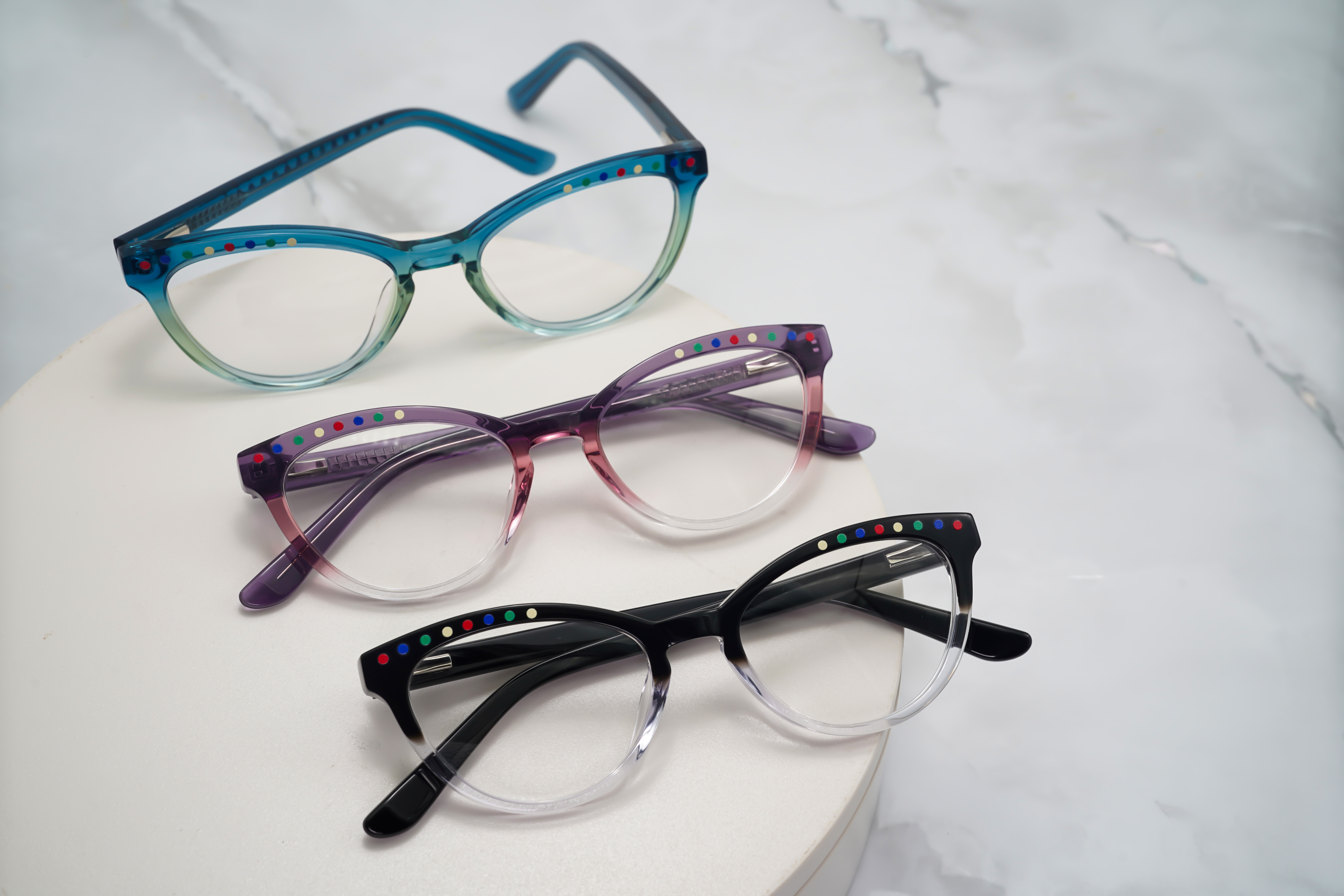
This comprehensive guide explores the essential quality control stages that distinguish professional glasses factories from unreliable suppliers. Understanding these stages helps OEM/ODM project managers select partners capable of delivering consistent, high-quality products that meet international standards and customer expectations.
Raw Material Inspection and Supplier Validation
Initial Material Assessment
Every eyewear oem factory begins quality control long before production starts. Raw material inspection forms the first defensive line against defects. An optical frame manufacturer must verify that incoming materials—acetate sheets, titanium rods, hinges, lenses, and coatings—meet specified standards. Dimensional tolerances, color consistency, material hardness, and chemical composition are measured against supplier certifications and customer specifications.
Material testing includes physical checks such as drop tests for brittleness, chemical resistance analysis, and surface finish evaluation. A glasses factory that invests in comprehensive material validation prevents costly production failures downstream. This stage typically involves sample batching, documentation review, and approved supplier lists to ensure traceability across OEM/ODM projects.
Supplier Relationship Management
Professional eyewear manufacturer operations establish long-term partnerships with vetted suppliers rather than pursuing lowest-cost alternatives. Regular audits, performance scorecards, and feedback loops ensure suppliers maintain consistent quality. This collaborative approach reduces defect rates and strengthens the reliability of glasses factory operations across multiple product lines.
In-Process Quality Control and Production Monitoring
Workstation Inspection Protocols
During manufacturing, an optical frame manufacturer implements real-time quality monitoring at critical control points. Cutting operations are checked for dimensional accuracy; molding processes are verified for color saturation and structural integrity; hinge assembly stations monitor alignment and functional smoothness. A glasses factory typically stations quality inspectors at fifteen to twenty workstations throughout the production line.
Eyewear oem factory teams use precision instruments—calipers, spectrophotometers, hardness testers, and torque gauges—to verify that each component meets specification before progressing to the next stage. Statistical process control charts track trending data to predict and prevent quality drift before batches become defective. This proactive approach significantly reduces rework costs and customer returns.
Assembly and Functionality Testing
Final assembly represents a critical convergence point where all subassemblies come together. An eyewear manufacturer verifies hinge movement range, temple arm tension, nose pad adhesion, and lens fit precision. Functionality tests simulate real-world usage conditions—opening and closing cycles, bridge stress, and impact resistance. A professionally managed optical frame manufacturer documents every test result and correlates defect patterns to specific production batches.
OEM/ODM projects often require specialized fixtures and testing protocols unique to customer specifications. Glasses factory operations invest in custom jigs and automated test equipment to ensure repeatability and eliminate human variability in critical functional assessments. This investment pays dividends in reduced warranty claims and improved customer retention.
Final Inspection, Packaging, and Shipping Verification
Comprehensive Final Quality Audit
Before leaving the production facility, every eyewear manufacturer product undergoes comprehensive final inspection. Visual assessment checks for scratches, discoloration, misalignment, and surface defects. Dimensional verification confirms all specifications remain within tolerance. An optical frame manufacturer may inspect one hundred percent of production units or employ statistical sampling methods for high-volume runs.
The glasses factory final inspection stage includes lens clarity verification, coating adhesion checks, and structural stress testing. Products are photographed for documentation, assigned batch numbers, and recorded in traceability systems. This stage serves as the last quality gate before products reach customers and directly reflects the eyewear oem factory's commitment to excellence.
Packaging Integrity and Shipping Preparation
Packaging quality often determines whether products arrive at customers in perfect condition. An eyewear manufacturer carefully selects protective materials, humidity-resistant packaging, and shock-absorbing designs. Glasses factory teams verify that packaging meets shipping standards and customer requirements, especially for OEM/ODM projects with specialized branding or presentation needs.
Final quality control includes weight verification to ensure correct unit counts, label accuracy for batch traceability, and documentation completeness. An optical frame manufacturer often conducts random drop tests of packaged units to confirm protective integrity. These practices transform quality control from a reactive function into a strategic competitive advantage that distinguishes premium eyewear manufacturers from volume-focused competitors.
FAQ
What are the most common quality defects found during eyewear production?
Common defects include hinge misalignment, lens fit irregularities, coating adhesion failure, color inconsistency, and bridge stress fractures. Professional glasses factory operations identify these defects early through in-process monitoring rather than discovering them after shipment. An optical frame manufacturer prevents most defects through rigorous material selection, equipment maintenance, and worker training programs.
How does an eyewear oem factory ensure consistency across large production runs?
Consistency relies on standardized work instructions, equipment calibration records, statistical process control monitoring, and regular first-article inspections when production parameters change. An eyewear manufacturer maintains detailed documentation linking every batch to specific material lots, machine settings, and inspector identifiers. This traceability enables root cause analysis when variations occur and supports continuous improvement initiatives.
What certifications should a glasses factory hold for OEM/ODM projects?
Professional eyewear manufacturers typically hold ISO 9001 quality management certification, ISO 13485 for medical device standards when applicable, and industry-specific accreditations. An optical frame manufacturer may also maintain certifications for environmental compliance, labor standards, and supply chain security. These credentials demonstrate that the glasses factory has implemented systematic quality control stages that exceed basic manufacturing practices and align with international customer expectations.



