
 EN
Common Quality Gaps in Recycled Eyewear Compared With Virgin Material: Practical Quality Control Steps
Discover 7 practical QC steps for RPET glasses and ocean plastic sunglasses—reduce defects, ensure compliance, and boost customer trust. Download the framework now.
Recycled eyewear has emerged as a sustainable alternative to traditional frames, addressing environmental concerns while offering cost advantages. However, manufacturers and retailers often encounter significant quality gaps when comparing recycled eyewear with virgin material counterparts. These differences in durability, optical clarity, material consistency, and structural integrity require systematic quality control measures to meet industry standards and customer expectations. Understanding these gaps is essential for anyone involved in eyewear production, sourcing, or quality assurance.
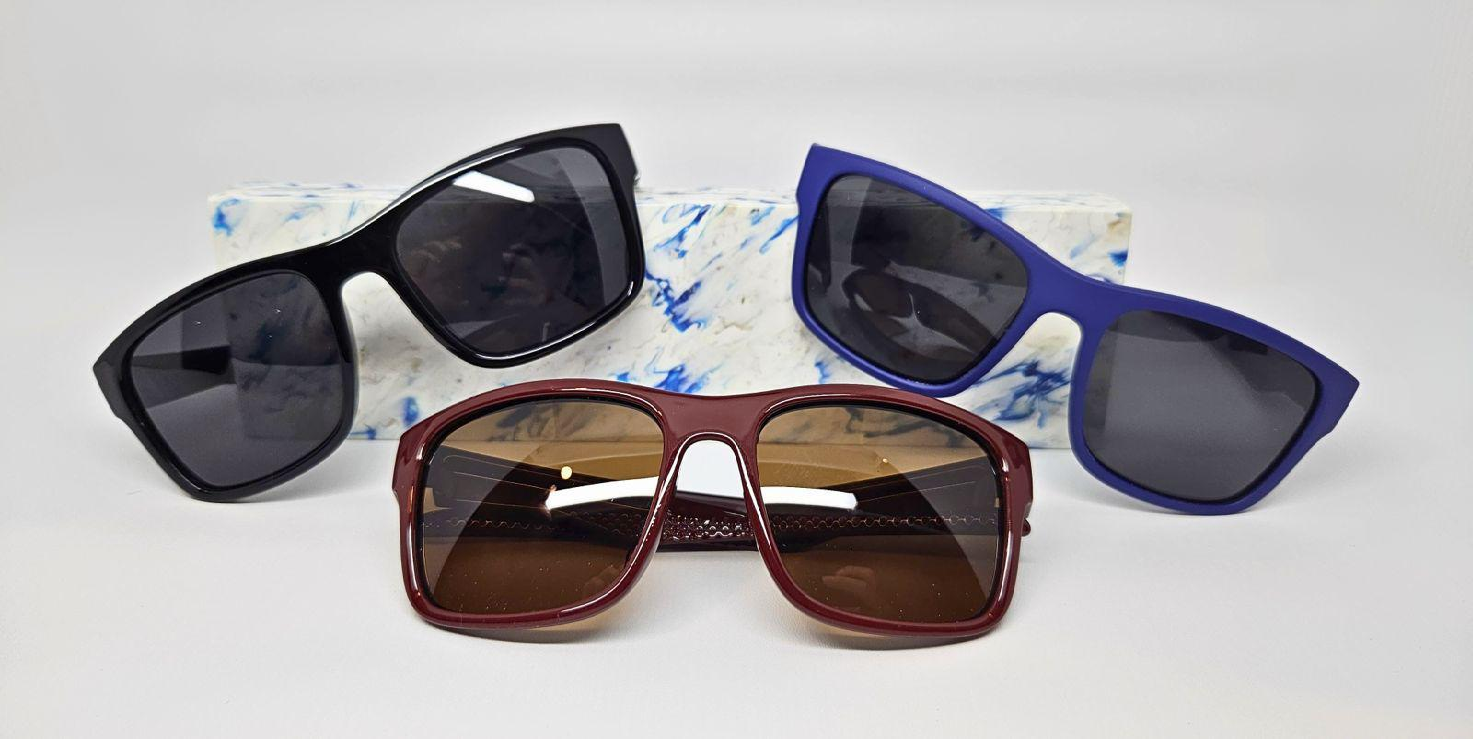
The shift toward sustainable eyewear production reflects growing market demand for environmentally conscious products. RPET glasses and frames made from recycled acetate represent significant progress in circular economy initiatives. Ocean plastic sunglasses and other upcycled options continue to gain traction in the market. Yet, the manufacturing process for recycled eyewear introduces variability that virgin material production does not face, making quality control implementation both critical and complex.
Material Consistency Challenges in Recycled Eyewear Production
Variability in Feedstock and Source Materials
The foundation of quality issues in recycled eyewear begins with feedstock inconsistency. Unlike virgin acetate or polycarbonate manufactured under controlled conditions, recycled acetate sources vary significantly in color, molecular weight, and purity. RPET glasses derived from post-consumer bottles carry unpredictable contamination levels, requiring advanced sorting and cleaning protocols. Each batch of ocean plastic sunglasses material brings unique compositional challenges depending on the collection region and environmental exposure duration. This variability directly impacts the ability to maintain uniform optical properties and frame durability across production runs.
Molecular Degradation During Recycling Processes
Recycled acetate undergoes thermal stress, chemical exposure, and mechanical breakdown during reclamation and reprocessing. This degradation reduces polymer chain length and mechanical strength compared to virgin material formulations. RPET glasses exhibit lower impact resistance and increased brittleness when processed from lower-quality recycled plastic sources. Implementing quality control checkpoints requires measuring polymer viscosity, tensile strength, and impact resistance before injection molding. Without these controls, recycled eyewear frames may exhibit premature cracking, warping, or lens-retention failures that virgin material frames would not experience.
Optical Performance and Lens Compatibility Issues
Dimensional Accuracy and Lens Fitting Tolerances
Ocean plastic sunglasses and other recycled eyewear frames often exhibit tighter dimensional tolerances than virgin plastic alternatives. Mold wear, temperature fluctuations, and material flow variations during injection molding cause frame geometry to deviate from specifications. RPET glasses require precise measurement of bridge width, temple length, and lens aperture dimensions to ensure proper optical alignment and lens fitment. Quality control teams must implement 3D scanning, calipers, and gauging systems to detect variance early. Even minor deviations of 0.5 to 1 millimeter can result in incorrect lens centering, compromised optical performance, and customer dissatisfaction.
Color Consistency and Finish Quality
Recycled acetate introduces color variation that virgin material does not present at the same scale. Residual dyes, oxidation, and contaminants in recycled feedstock create batch-to-batch color drift. Ocean plastic sunglasses may exhibit yellowing, fading, or uneven pigmentation due to UV exposure during collection and storage. RPET glasses require colorimetry testing to ensure hue, saturation, and lightness remain within acceptable ranges. Surface finish quality also suffers when recycled material contains micro-debris that creates rough spots, orange peel texture, or crystalline appearance. Quality control procedures must include visual inspection, tactile assessment, and instrumental color measurement before frames enter packaging.
Durability and Performance Standards in Recycled Eyewear Testing
Stress Testing and Material Fatigue Analysis
Recycled eyewear exhibits accelerated material fatigue compared to virgin formulations. Stress concentration points, hinge areas, and bridge zones fail sooner under repeated flexing and torque loads. RPET glasses derived from contaminated feedstock show 20 to 40 percent reduction in flexural endurance compared to equivalent virgin plastic frames. Ocean plastic sunglasses require extended drop testing, impact simulation, and hinge cycling protocols to validate durability claims. Quality control teams must establish baseline performance metrics from virgin material benchmarks, then adjust acceptance criteria downward to account for recycled material limitations. Testing protocols should include salt-fog corrosion simulation for metallic components, UV exposure chambers for color stability, and temperature cycling to assess structural integrity.
Chemical Resistance and Environmental Exposure
Recycled acetate demonstrates reduced resistance to solvents, oils, and environmental contaminants. The polymer structure weakens when exposed to perspiration acids, cosmetics, and cleaning agents at higher concentrations than virgin material. RPET glasses may absorb moisture differently, leading to dimensional change and optical distortion over time. Ocean plastic sunglasses face particular challenges due to residual salt, microplastics, and degradation products embedded in the recycled feedstock. Quality assurance protocols must include chemical immersion testing, moisture absorption measurement, and accelerated weathering cycles. These tests validate that recycled eyewear meets durability standards for real-world usage environments, ensuring customer safety and satisfaction.
Practical Quality Control Implementation Framework
Incoming Material Inspection and Feedstock Validation
Establish comprehensive incoming inspection protocols for all recycled acetate and RPET glasses feedstock. Measure material properties including viscosity index, color coordinates, and moisture content immediately upon receipt. Conduct particle analysis to detect contaminant levels in ocean plastic sunglasses material before processing. Create acceptance criteria based on virgin material baseline specifications, then define acceptable variance ranges specific to recycled eyewear production. Document all incoming test results and establish supplier performance scorecards. This upstream control prevents defective material from entering production, reducing downstream waste and rework costs.
In-Process Monitoring and Real-Time Adjustment
Implement real-time monitoring during injection molding and frame assembly for recycled eyewear production. Install temperature sensors, pressure gauges, and cavity pressure monitoring on injection machines processing RPET glasses and recycled acetate. Establish statistical process control charts to track dimensional variance, weight consistency, and injection time across production runs. When ocean plastic sunglasses or other recycled eyewear batches show process drift, adjust mold temperatures, injection speeds, and material feed rates immediately. Implement machine vision systems to detect surface defects, color anomalies, and dimensional out-of-spec conditions automatically. This real-time approach prevents large batches of non-conforming recycled eyewear from reaching final inspection stages.
Final Product Testing and Release Criteria
Establish rigorous final inspection protocols specific to recycled eyewear quality requirements. Conduct random sampling of finished RPET glasses and ocean plastic sunglasses from each production batch, measuring dimensional accuracy, optical performance, and cosmetic appearance. Perform drop tests, hinge flex testing, and stress load validation on representative samples. Verify color consistency using spectrophotometry and compare results against approved master samples. Document all test results and establish clear pass-fail criteria before releasing recycled eyewear to inventory. Maintain detailed traceability records linking finished products to raw material batches, processing parameters, and quality test outcomes.
FAQ
Why does recycled eyewear typically show more quality variation than virgin material frames?
Recycled eyewear, including RPET glasses and ocean plastic sunglasses, derives from post-consumer or post-industrial feedstock with inherent inconsistencies in composition, color, and molecular structure. Unlike virgin acetate or polycarbonate produced under strict manufacturing specifications, recycled acetate feedstock contains residual contaminants, variable degradation levels, and unpredictable thermal history. The recycling process itself introduces additional variability through reprocessing techniques, temperature exposure, and mechanical stress. These factors combine to create batch-to-batch and within-batch variation that virgin material production can better control.
What specific quality control tests are essential for recycled eyewear production?
Critical quality control tests for recycled eyewear include material viscosity analysis, tensile strength measurement, impact resistance testing, and color consistency verification using spectrophotometry. For RPET glasses and ocean plastic sunglasses, dimensional accuracy checks using 3D scanning or precision calipers are essential. Optical performance testing ensures correct lens alignment and visual clarity. Drop tests and hinge flex cycling validate durability under real-world stress conditions. Chemical resistance and moisture absorption testing confirm environmental stability. Finally, cosmetic inspection for surface defects, color uniformity, and finish quality ensures recycled eyewear meets acceptable aesthetic standards.
How can manufacturers reduce quality gaps between recycled eyewear and virgin material products?
Manufacturers can reduce quality gaps in recycled eyewear through multiple strategies: implementing rigorous incoming material inspection to validate recycled acetate and RPET glasses feedstock quality, establishing tighter injection molding process controls with real-time monitoring, and investing in advanced material processing technology to improve recycled material consistency. For ocean plastic sunglasses and similar products, secondary reprocessing or blending recycled material with virgin material can improve properties. Adjusting design specifications to account for recycled material limitations, implementing comprehensive final product testing protocols, and maintaining detailed traceability documentation all contribute to consistent quality. Continuous supplier relationship management and material performance tracking help establish benchmarks and drive ongoing improvement in recycled eyewear production.



