
 EN
Cutting Defect Rates in Sunglasses Mass Production: Practical Quality Control Steps
Discover 7 practical, low-cost quality control steps proven to cut defect rates in sunglasses mass production. Implement today.
Defect rates in sunglasses mass production directly impact profitability, brand reputation, and customer satisfaction. A sunglasses manufacturer operating at scale faces constant pressure to maintain quality while managing production timelines and costs. Even small defect percentages translate to thousands of damaged units when producing millions of pairs annually. The difference between a 2% and a 5% defect rate represents millions in warranty claims, returns, and reputational damage.
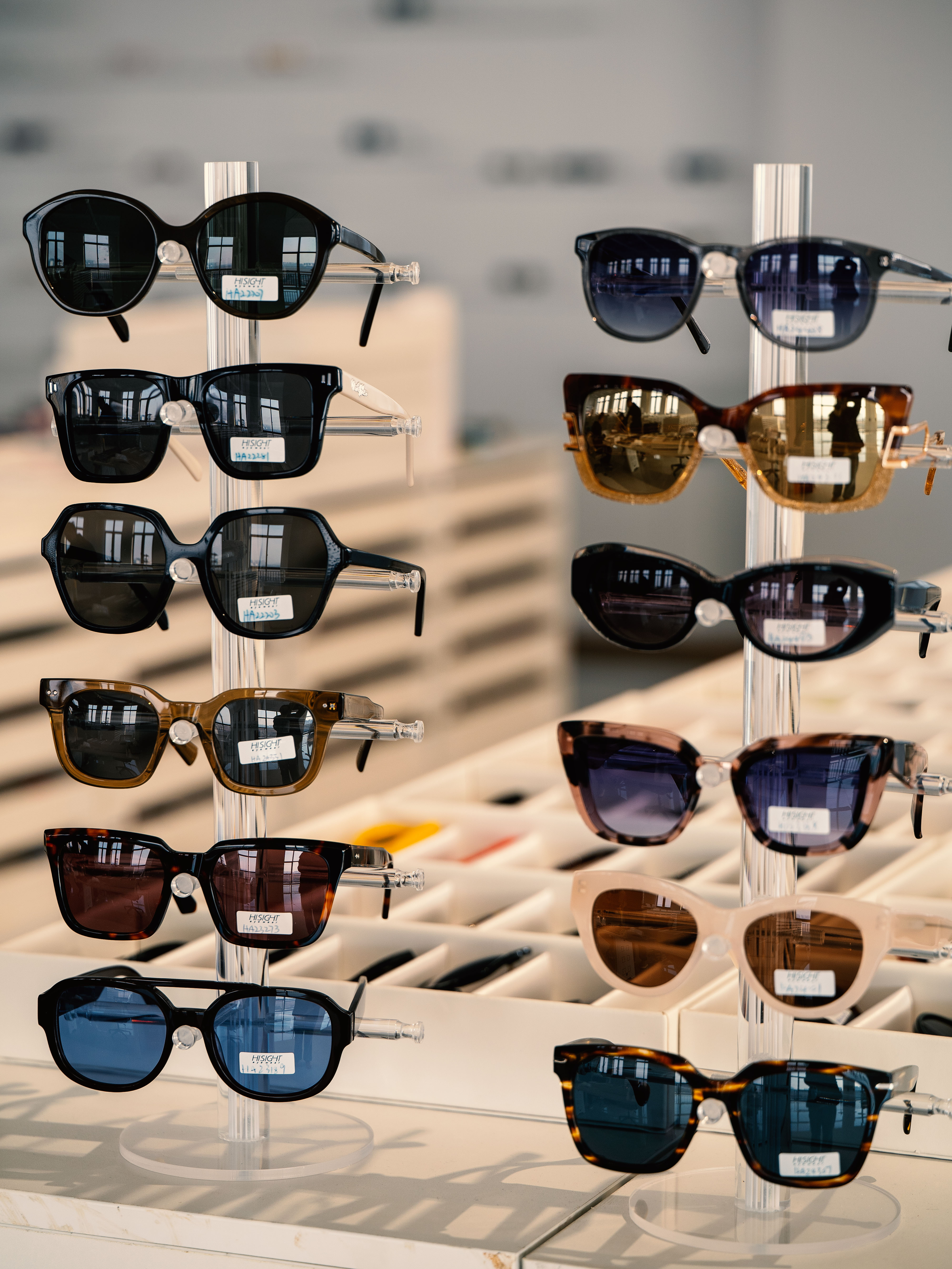
Implementing systematic quality control steps separates industry leaders from producers struggling with recalls and customer complaints. A sunglasses factory that prioritizes defect prevention during design, material selection, assembly, and inspection phases achieves dramatically lower failure rates. This article outlines practical, proven quality control measures that any sunwear oem factory can integrate into existing production workflows without massive capital expenditure or production delays.
Material Inspection and Incoming Quality Control
Establishing Clear Supplier Standards
Every sunglasses manufacturer depends on consistent material quality from suppliers. Lens blanks, frame materials, hardware, and coatings must meet strict specifications before entering production. Creating a detailed supplier qualification process reduces defects at the source. Document all material specifications, establish batch testing protocols, and maintain ongoing communication with suppliers about rejection data and quality trends. A sunglasses factory that inspects incoming materials thoroughly prevents downstream defects that are exponentially more expensive to fix during assembly.
Implementing Statistical Sampling Plans
Manual inspection of every single component is costly and inefficient, but random inspection without discipline risks shipping defective batches. Statistical sampling plans balance cost and risk by defining sample sizes and acceptance criteria based on batch sizes and acceptable quality levels. A sunwear oem factory using ANSI/ASQ Z1.4 sampling tables can identify defects before 95% of a shipment enters production while keeping inspection labor manageable. Test lenses for optical clarity, coating adhesion, and hardness. Check frames for dimensional accuracy, material flaws, and finish consistency. Document all findings to identify patterns and pressure suppliers for corrective action.
In-Process Quality Control During Assembly
Checkpoint-Based Inspection Strategy
Quality cannot be inspected into finished products; it must be built into every assembly step. A sunglasses manufacturer should establish quality checkpoints at critical stages: frame preparation, lens insertion, hinge attachment, nose pad application, and final assembly. At each checkpoint, train assembly technicians or dedicated quality inspectors to verify that parts meet specifications before passing to the next stage. Catching defects early costs far less than discovering them during final inspection or after shipment. A sunglasses factory that implements checkpoint inspection reduces rework costs and minimizes the number of defective units reaching the warehouse.
Statistical Process Control and Real-Time Monitoring
Beyond individual checkpoints, a sunwear oem factory should monitor key process metrics in real time using control charts. Track measurements such as lens-to-frame alignment, hinge torque, bridge width, and temple angle for random samples throughout the production shift. Plot these values on control charts to identify when variation exceeds acceptable limits. When data points drift outside control limits, stop the line, investigate the root cause, and adjust equipment or processes before producing more defective units. This proactive approach prevents batches of defective products and demonstrates continuous commitment to quality improvement.
Final Inspection, Testing, and Defect Documentation
Comprehensive Final Inspection Protocols
A sunglasses manufacturer must establish a final inspection stage where trained inspectors examine 100% of finished units or representative samples depending on batch size and risk tolerance. Inspection should cover optical function, frame alignment, finish quality, lens cleanliness, hinge stability, and packaging condition. Use standardized inspection checklists and lighting conditions to ensure consistency. Train inspectors to identify subtle defects such as lens crazing, coating bubbles, misaligned temples, or loose hinges. Provide regular refresher training and conduct inter-rater reliability checks to confirm all inspectors apply standards consistently. A sunglasses factory that invests in thorough final inspection protects its reputation and reduces field failures.
Testing Beyond Visual Inspection
Visual inspection alone misses internal defects and performance issues. A sunwear oem factory should perform functional testing on sample units from each production batch. Test lens optical power using automated lensmeters, verify UV protection with spectrophotometers, check hinge durability through mechanical cycling tests, and assess frame stress tolerance through drop tests or flex tests. These tests reveal latent defects that could cause premature failure in customer use. Document all test results, establish pass/fail criteria aligned with customer specifications, and maintain traceability so defective batches can be recalled if necessary. Testing adds cost but prevents far more expensive warranty claims and reputation damage.
Defect Tracking and Root Cause Analysis
Every defect discovered during inspection or testing should be recorded, categorized, and investigated. A sunglasses manufacturer that tracks defect data by type, production date, and assembly line identifies systemic problems quickly. Perform root cause analysis for high-frequency defects to determine whether the issue stems from equipment calibration, material variation, operator error, or design weakness. Use findings to drive corrective actions such as equipment maintenance, supplier changes, process redesign, or operator retraining. A sunglasses factory that closes the feedback loop between inspection and process improvement continuously reduces defect rates month over month.
FAQ
What defect rate is acceptable for sunglasses manufacturing?
Industry best practice typically targets defect rates below 2% for mass-produced sunglasses, though premium brands aim for 0.5% or lower. The acceptable rate depends on customer specifications, market segment, and cost structure. A sunglasses manufacturer should establish a defect target aligned with customer expectations and continuously work to improve. Even small reductions from 3% to 2% can represent significant cost savings at scale.
How often should a sunglasses factory perform supplier audits?
A sunwear oem factory should audit critical suppliers at least annually, with more frequent audits for suppliers exhibiting quality trends or changes in production methods. High-risk suppliers should be audited every six months. Include facility inspections, process observation, and review of quality records and test data. Audit frequency should increase if defect rates rise or if suppliers introduce new materials or equipment.
Can quality control reduce production speed?
Comprehensive quality control may add time to production if poorly designed, but well-structured checkpoints and automated testing actually improve efficiency. A sunglasses manufacturer that catches defects early avoids expensive rework and batch rejections that consume far more time. Statistical sampling, automated optical testing, and real-time monitoring keep production flowing while maintaining defect rates. Quality and speed are complementary when quality control is integrated into the process rather than added as an afterthought.



