
 EN
Frame Rigidity Needs for High-Index Lenses in Optical Frames: Manufacturing Considerations for OEM/ODM Projects
Why high-index lenses demand engineered frame rigidity—material science, hinge design & testing protocols for optical frames.
High-index lenses demand exceptional structural support, and this requirement fundamentally reshapes how manufacturers approach frame design and material selection. When prescription frames incorporate high-index lenses, the increased weight and optical power of the lens creates mechanical stress on the frame structure that standard eyeglass frames were never engineered to handle. Understanding frame rigidity needs is critical for OEM and ODM projects seeking to deliver durable, optically stable products that maintain their precision over years of daily wear.
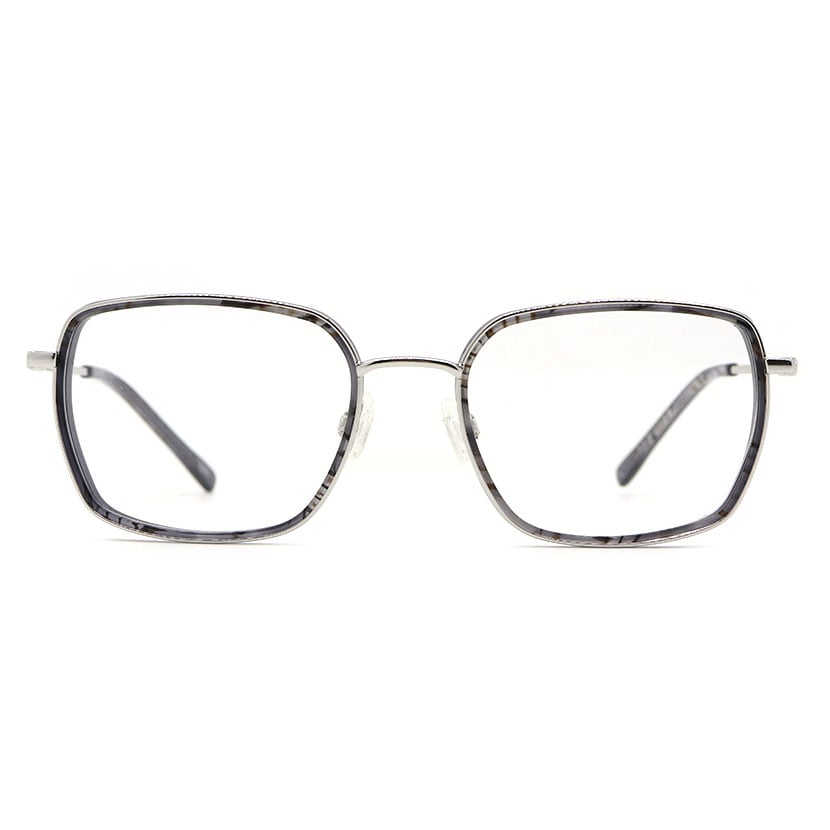
The relationship between lens index and frame performance is not simply proportional; it is exponential in its demands. High-index optical lenses—typically 1.60, 1.67, 1.74, or higher—offer thinner, lighter profiles than traditional 1.50-index lenses, yet they concentrate optical power into a smaller volume. This concentration creates point loads and bending moments that transform optical eyewear into a precision engineering challenge. Manufacturers of optical frames must therefore adopt rigorous material science and structural analysis to ensure their designs can withstand these forces without deformation, which would compromise vision quality and wearer comfort.
Material Selection and Structural Requirements
Choosing Materials That Support High-Index Optical Frames
The material choice for optical frames directly determines how well the structure resists bending, warping, and permanent deformation. Titanium, acetate, and advanced polymer blends each offer distinct advantages for high-index applications. Titanium optical frames provide superior rigidity with minimal weight, making them ideal for high-index lens projects where structural integrity must be maintained without adding bulk. The modulus of elasticity in titanium far exceeds that of standard plastics, meaning the frame will return to its original geometry after stress is removed, rather than creeping or settling into a new position.
Acetate frames, while offering aesthetic warmth and color options, require thicker wall sections and carefully engineered bridge and temple designs when used with high-index lenses. Manufacturers working on eyeglass frames projects must account for the fact that acetate will experience more noticeable flexing under load, potentially affecting lens alignment over time. Advanced nylon and polyamide compounds have emerged as a middle ground, offering better rigidity than standard acetate while maintaining some cost advantage over titanium optical frames. For OEM and ODM projects targeting specific price points, material selection becomes a critical trade-off between performance and production cost.
Bridge and Temple Architecture
The bridge—the section connecting the two lens apertures—bears exceptional load concentration in high-index optical frames. This small structural element must prevent lens rotation and translation while maintaining precise optical axis alignment. ODM manufacturers typically increase bridge cross-sectional area and reinforce internal geometry with ribs or flanged sections that add rigidity without excessive weight.
Hinge design represents another critical consideration for prescription frames incorporating high-index lenses. Barrel hinges must be engineered with tighter tolerances and more precise bearing surfaces than standard eyewear hinges, as any excessive play will compound over time, allowing the frame to rack and misalign the optical centers of the lenses. High-performance optical eyewear often uses spring hinges or reinforced barrel systems that maintain frame geometry under the specific stress profiles created by high-index lens weight and optical power distribution.
Optical Stability and Dimensional Tolerances
Maintaining Lens Alignment Through Manufacturing
Frame rigidity directly correlates with the ability to hold precise dimensional tolerances during manufacturing, storage, and wear. High-index optical frames must maintain lens aperture geometry within tolerances typically ±0.5 to ±1.0 millimeters to ensure the optical centers align correctly with the wearer's pupils. Any frame flex that exceeds these bounds will shift optical power delivery and induce prism imbalance, resulting in visual discomfort, headaches, and poor vision quality. OEM and ODM manufacturers must therefore implement rigorous quality control processes that verify frame rigidity and dimensional stability at multiple stages: after molding, after hinge installation, after surface treatment, and after final assembly with lenses.
Thermal cycling also tests frame rigidity in ways that static stress does not. Temperature fluctuations cause differential expansion between materials—for example, between a metal bridge and plastic temples in an acetate eyeglass frames design. This thermal mismatch can induce internal stress that gradually accumulates, potentially causing permanent deformation or even microcracking over months of use. High-index optical frames must be designed with materials and geometries that minimize thermal stress or explicitly accommodate material expansion differences through flexible joints or compliant design sections.
Testing and Validation Protocols
Rigorous testing of optical frames becomes essential when high-index lenses are involved. Standard optical eyewear testing includes drop tests, temple flex tests, and lens retention tests, but high-index projects often demand additional validation: finite element analysis (FEA) simulation of stress distribution under maximum expected loads, accelerated aging tests to detect frame fatigue and creep, and optical performance testing before and after mechanical stress application. These protocols ensure that prescription frames maintain their functional integrity throughout their intended service life, typically three to five years for regular daily wear.
Manufacturers conducting OEM and ODM work should establish baseline rigidity measurements using techniques such as dial gauge deflection testing or strain gauge monitoring. These metrics quantify how much a frame bends under defined load conditions, allowing engineers to verify that stiffness meets design targets. For optical eyewear incorporating high-index lenses, even small improvements in frame rigidity can translate to measurable improvements in optical stability and wearer satisfaction, justifying the additional engineering investment during the product development phase.
Manufacturing Processes and Quality Integration
Injection Molding and Precision Control
The manufacturing process for optical frames fundamentally affects achieved rigidity. Injection molding, the dominant process for acetate and nylon eyeglass frames, introduces variability in wall thickness, density distribution, and residual stress. High-index optical frames require tighter process control: slower mold filling to reduce internal voids, optimized gate locations to minimize stress concentration, and carefully managed cooling schedules to prevent warping. Pressure-assist molding and gas-assisted injection molding techniques can improve internal structure quality, reducing porosity and improving material density in critical load-bearing regions of prescription frames.
Titanium optical frames require fundamentally different processes: investment casting, stamping, or machining from solid stock. Each method introduces its own rigidity and tolerance challenges. Casting creates internal structure variability that requires post-casting heat treatment to relieve residual stress and stabilize geometry. Stamped titanium eyeglass frames benefit from work-hardening but may require secondary annealing if subsequent assembly operations create excessive thermal input.
Assembly and Final Inspection
Frame assembly represents a critical control point where rigidity can be compromised if hinge installation, bridge bonding, or temple attachment is not executed to tight specifications. Adhesive bonding in acetate optical eyewear must fully cure before the frame experiences any mechanical stress, or the joint will not develop its designed strength. Ultrasonic welding or threaded screw assembly for titanium optical frames requires careful torque control to achieve consistent joint preload without exceeding material yield strength. Each assembly technique must be validated for its ability to maintain frame rigidity under the specific load profiles created by high-index lenses in prescription frames.
Final inspection should include functional testing that simulates real-world stress: temple opening to full extension and back to closed position multiple times, applying downward pressure to the bridge while measuring optical center shifts, and temperature cycling to detect any permanent deformation. This comprehensive approach ensures that optical eyewear delivered to end users will maintain its performance and comfort throughout the intended wear period, protecting brand reputation and customer satisfaction in competitive OEM and ODM markets.
FAQ
Why is frame rigidity more critical for high-index optical frames than standard eyeglasses?
High-index lenses concentrate optical power into a smaller, denser volume, creating significantly higher mechanical stress on the frame structure. Any frame flex will shift lens position relative to the wearer's eyes, degrading optical performance and inducing visual discomfort. Standard eyeglass frames designed for lower-index lenses simply lack the structural stiffness needed to accommodate high-index lens loads without deformation, making rigidity redesign essential for prescription frames incorporating high-index materials.
What material is best for optical frames with high-index lenses in OEM/ODM production?
Titanium optical frames offer superior rigidity and durability but at higher cost. Advanced nylon and acetate eyeglass frames can perform adequately if engineered with thicker walls and reinforced geometry. The choice depends on project cost targets, production volume, and performance requirements. OEM and ODM manufacturers must evaluate material properties—specifically modulus of elasticity and creep resistance—against cost and aesthetic objectives to select the optimal solution for their specific application.
How can manufacturers verify that optical frames will maintain rigidity during real-world use?
Rigorous testing protocols including finite element analysis, mechanical deflection testing, thermal cycling, and accelerated aging studies are essential. Manufacturers should establish baseline rigidity measurements and conduct optical performance testing before and after mechanical stress to confirm that prescription frames maintain functional integrity. These validation processes, while costly, prevent costly field failures and ensure that optical eyewear performs reliably throughout its intended service life in competitive markets.



