
 EN
Injection-Molded vs Handmade Sunglasses: Manufacturing Differences
Compare speed, cost, customization & sustainability for OEM sunglasses manufacturing. Choose the right factory partner.
The choice between injection-molded and handmade sunglasses represents a fundamental decision in eyewear production. Understanding the manufacturing differences helps buyers, retailers, and businesses make informed choices about which approach best aligns with their brand values, budget constraints, and quality expectations. A skilled sunglasses manufacturer employs both technologies, recognizing that each method delivers distinct advantages depending on design complexity, volume requirements, and market positioning. This guide explores the technical, economic, and qualitative distinctions between these two production approaches.
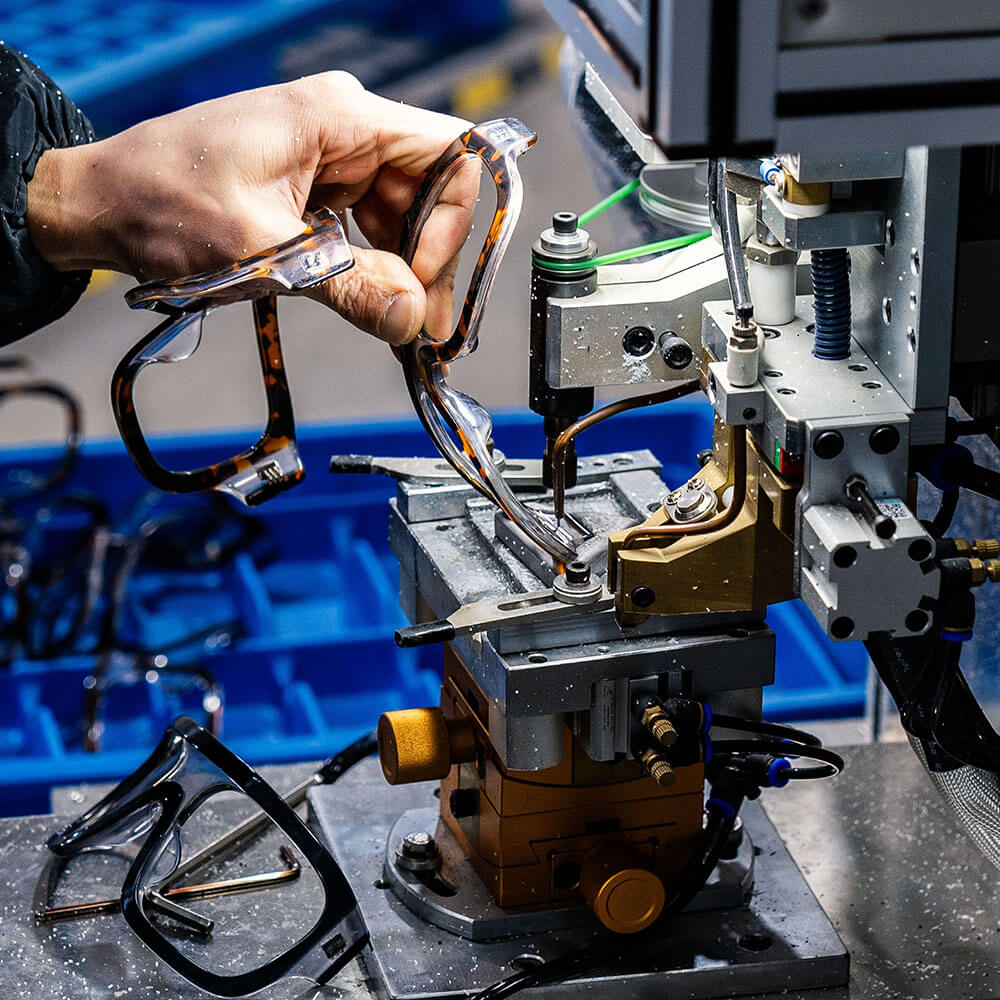
Injection molding and handcrafting follow entirely different production workflows, timelines, and cost structures. The sunglasses factory equipped with injection molding technology can achieve consistent output, precise dimensions, and rapid scaling. Handmade production, by contrast, emphasizes artisanal craftsmanship, customization potential, and premium positioning. Neither approach is universally superior; the optimal choice depends on your specific business objectives, target market segment, and brand narrative. This article clarifies the core differences so you can partner with the right sunwear oem factory or production method for your needs.
Injection Molding: Speed, Consistency, and Scale
How Injection Molding Works in Sunglasses Production
Injection molding involves heating raw plastic material, injecting it into custom metal molds under high pressure, and cooling the frames into precise shapes. A modern sunglasses factory using this method can produce thousands of identical frames daily. The process begins with mold design and fabrication, which requires significant upfront investment but becomes cost-effective only after high volume production. Once the mold is ready, each injection cycle takes just seconds to minutes, meaning cycle times are dramatically lower than handmade alternatives. This method suits mass-market brands, seasonal collections, and standardized designs where consistency and speed matter more than one-of-a-kind appeal.
Quality and Consistency in Injection-Molded Frames
Injection molding delivers exceptional consistency across every unit produced. Each frame matches the others in weight, dimensions, hinge tension, and material thickness, which simplifies quality control and logistics. A sunglasses manufacturer using precision injection molding can maintain tolerances within fractions of a millimeter. This uniformity is particularly valuable for retailers stocking inventory, as customers expect identical products within the same style code. However, injection molding can sometimes feel less refined in aesthetic details compared to handcrafted work, particularly in bridge curves, temple tapering, or material surface texture. The trade-off is predictability and reliability for potentially less individualized character.
Handmade Sunglasses: Artisanal Craft and Premium Positioning
The Handmade Production Process
Handmade sunglasses are assembled and finished by skilled artisans using hand tools, traditional joining techniques, and meticulous attention to detail. Every frame involves manual cutting, shaping, polishing, hinge installation, and quality inspection by human experts. A sunwear oem factory specializing in handmade work typically produces fewer units per artisan per day, but each frame reflects individual care and refinement. The process allows for greater flexibility in accommodating custom specifications, material variations, and intricate design elements that would be difficult or impossible to achieve through injection molding. Handmade production also creates narrative appeal; buyers often value the story of human craftsmanship, heritage techniques, and exclusivity.
Advantages of Artisanal Production
Handmade sunglasses offer several competitive advantages in the premium and luxury segments. Artisans can accommodate custom orders, small-batch runs, and unique finishes without major retooling or mold investment. The tactile quality of handfinished frames often feels superior, with smoother edges, refined hinge action, and superior weight distribution perceived by discerning users. A sunglasses manufacturer leveraging handmade production can position frames as limited editions or bespoke offerings, justifying higher retail prices and building brand loyalty among customers who value exclusivity. Additionally, handmade work reduces environmental impact associated with large-scale injection molding equipment and energy consumption, appealing to sustainability-conscious brands.
Cost, Lead Time, and Production Volume Implications
Capital Investment and Mold Costs
Injection molding requires substantial upfront tooling investment, typically ranging from five thousand to fifty thousand dollars per mold design, depending on complexity. This cost is justified only when production volumes justify amortization across thousands or tens of thousands of units. A sunglasses factory committing to injection molding must forecast demand accurately and commit to long production runs. Handmade production, by contrast, requires minimal capital investment beyond skilled labor and basic hand tools. A sunwear oem factory can start handmade production with lower financial risk, scaling labor gradually as orders increase. This makes handmade production ideal for new brands, experimental designs, or niche markets where volume uncertainty is high.
Unit Cost and Economies of Scale
Once tooling is amortized, injection-molded frames achieve dramatically lower per-unit costs at high volumes. A sunglasses manufacturer producing fifty thousand units can reduce frame costs to five to ten dollars each, including material, labor, and overhead. Handmade production typically costs fifteen to forty dollars per frame in labor alone, making it economically viable only when retail prices justify the premium positioning. Lead times also differ significantly; a sunglasses factory with existing injection molds can deliver production within four to eight weeks, while handmade orders may require three to six months depending on artisan availability and complexity. Retailers needing quick seasonal turnarounds favor injection molding, while direct-to-consumer luxury brands accept longer lead times as part of the premium experience.
Design Flexibility and Customization Capabilities
Design Constraints in Injection Molding
Injection molding imposes design limitations that a sunglasses manufacturer must understand before committing to production. Undercuts, sharp interior angles, and extremely thin walls are difficult or impossible to achieve without compromising mold durability or part quality. Color options are limited to materials and pigments available in bulk, though multiple color runs can occur if volume justifies separate production batches. A sunwear oem factory using injection molding must finalize designs early, as design changes require expensive mold modifications. Once production begins, flexibility is minimal, making this approach best for mature, proven designs with predictable demand rather than experimental or trendy styles that may evolve mid-season.
Customization and Small-Batch Flexibility
Handmade production excels in customization and small-batch work. Artisans can adjust bridge width, temple length, material color, and decorative finishes for individual orders without tooling changes. A sunglasses manufacturer offering bespoke services builds brand differentiation and customer loyalty by accommodating specific requests. Each handmade frame can feature unique materials, custom engraving, or personalized color combinations that would be prohibitively expensive through injection molding. This flexibility makes handmade production attractive for luxury brands, fashion houses seeking exclusive collections, and businesses building direct relationships with customers who value personalization. The downside is that this customization cannot scale beyond artisan capacity without proportionally increasing labor costs.
FAQ
What is the typical production timeline for injection-molded versus handmade sunglasses?
Injection molding typically requires four to eight weeks from approved tooling to finished production, with cycles accelerating after tooling completion. Handmade production generally takes eight to sixteen weeks depending on complexity, artisan availability, and custom requests. The key difference is that injection-molded timelines are heavily front-loaded with tooling delays, while handmade timelines scale proportionally with order volume. A sunglasses manufacturer can expedite handmade work by adding artisans, whereas injection-molded production speed is limited by machine cycle time and mold quality.
Which production method offers better environmental sustainability?
Handmade sunglasses generally have lower environmental impact due to minimal energy consumption and reduced material waste during hand-finishing. Injection molding requires significant electricity for heating, injection pressure, and cooling systems, plus energy for large equipment operation. However, when considering per-unit environmental cost across high-volume production, injection molding becomes more efficient because total energy divided by thousands of units is lower than energy per handmade frame. A sunglasses factory can reduce environmental impact in either method through material recycling, reduced packaging, and energy-efficient equipment upgrades.
Can a sunglasses manufacturer combine both injection molding and handmade techniques?
Yes, many producers use hybrid approaches where frames are injection molded, then enhanced with handmade finishing touches such as temple shaping, hinge tuning, or decorative hand-application. This strategy allows a sunwear oem factory to achieve both production efficiency and artisanal quality appeal. For example, basic frame geometry can be injection molded quickly, while premium versions receive handcrafted refinements before sale. This hybrid model maximizes flexibility, reduces per-unit costs compared to full handmade production, and maintains premium brand positioning in targeted market segments.



