
 EN
Print Adhesion Problems on Custom Sunglasses Temples and Lenses: Quality Control in Production
Discover root causes, ASTM-tested QC protocols, and durable ink+primer solutions for OEM & promotional eyewear. Download best practices.
Print adhesion failures represent one of the most significant quality challenges in custom sunglasses production. When inks or coatings fail to bond properly with temple surfaces or lens materials, the entire product becomes unmarketable and unreturnable to the supply chain. These defects directly impact brand perception, customer satisfaction, and manufacturing profitability across the promotional eyewear and OEM industries.
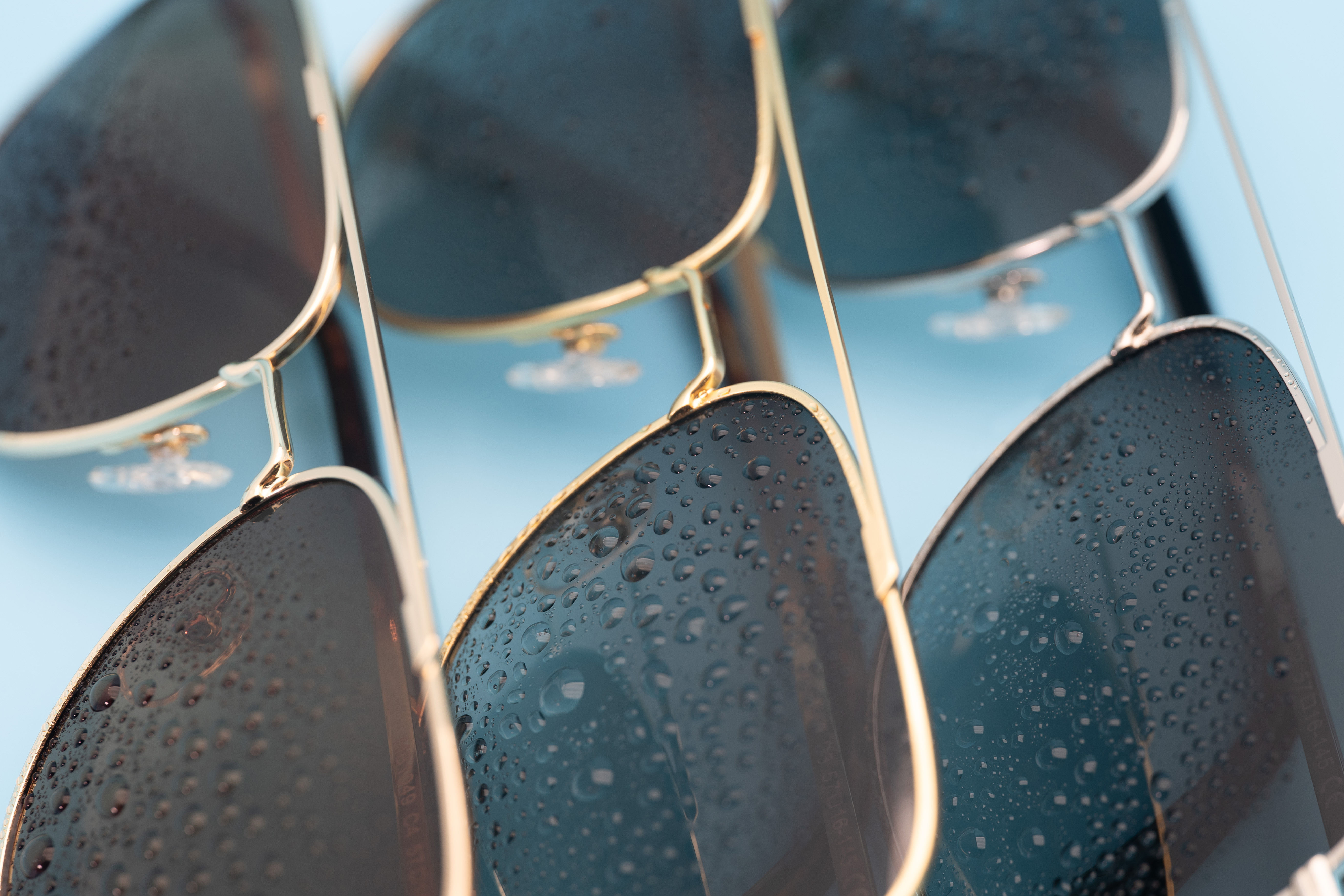
Understanding the root causes of adhesion failure is essential for manufacturers producing branded sunglasses, OEM sunglasses, and high-volume promotional sunglasses. The interaction between printing technology, substrate preparation, environmental conditions, and post-production handling determines whether logos, patterns, and protective coatings remain intact throughout the product lifecycle. This comprehensive guide explores the critical factors that influence print adhesion and outlines actionable quality control protocols.
Understanding Print Adhesion Failures in Production
Root Causes of Poor Adhesion in Custom Sunglasses
Print adhesion problems stem from multiple interconnected factors. Contamination on temple surfaces—including dust, oils, or residue from previous manufacturing steps—prevents ink from forming chemical bonds with the substrate. When branded sunglasses or promotional sunglasses templates lack proper surface preparation, inks sit on top rather than penetrating or bonding with the material. Temperature and humidity fluctuations during the printing process cause ink to cure unevenly, creating weak points where adhesion fails prematurely.
Material incompatibility also drives adhesion failures in OEM sunglasses production. Not all inks work equally well with polycarbonate, acetate, metal alloys, or coated lens materials. If adhesives or primers are not matched to both the substrate and the ink system, printing will flake or peel within weeks or even days of production. Additionally, insufficient curing time or incorrect temperature settings prevent chemical cross-linking between ink molecules and the substrate surface.
Impact on Brand Perception and Customer Experience
Adhesion failures damage customer trust and brand reputation immediately. When branded sunglasses arrive with peeling logos or fading temple prints, the recipient perceives poor quality and questions the entire product offering. For promotional sunglasses intended as corporate gifts or event merchandise, adhesion defects undermine the promotional message and waste marketing investment. Replacement and recall costs multiply quickly, straining production timelines and budgets.
Quality Control Protocols for Adhesion Testing
Pre-Production Testing and Material Validation
Effective quality control begins before production runs start. Manufacturers must conduct adhesion compatibility tests between specific ink formulations and substrate materials for each custom sunglasses design variant. Sample testing using ASTM D3359 (tape adhesion test) or cross-hatch adhesion tests identifies problems early and prevents batch-level failures. Testing should replicate the actual curing environment, including temperature ramps, humidity levels, and dwell times used during production.
Surface preparation procedures must be documented and validated for promotional sunglasses and OEM sunglasses batches. Plasma cleaning, corona treatment, or primer application should be evaluated for consistency and effectiveness. Each substrate material—whether polycarbonate lenses, acetate temples, or metal frames—requires tailored preparation protocols to ensure optimal ink adhesion.
In-Process Monitoring and Environmental Control
During production, environmental conditions directly determine adhesion success. Printing facilities must maintain stable temperature ranges (typically 68–72°F) and relative humidity levels (45–55%) throughout the printing and curing phases for branded sunglasses and OEM sunglasses lines. Humidity drift causes substrate expansion and contraction, creating stress points where adhesion fails. Temperature spikes accelerate ink curing inconsistently, leaving uncured areas vulnerable to peeling.
Ink viscosity must be monitored continuously, as thickening or thinning from environmental changes reduces penetration and bond strength. Press operators should verify ink-to-substrate contact pressure and printing head distance to ensure uniform transfer. For custom sunglasses with intricate temple graphics or detailed lens prints, process parameters must be locked and verified with each production shift.
Post-Production Adhesion Assessment
Quality control personnel should perform tactile and visual inspections on random samples from each production batch. Rubbing tests with a cloth or cotton swab simulate real-world handling and reveal early-stage adhesion weakness. If prints rub off or show discoloration during these tests, the entire batch must be quarantined and reprocessed. For promotional sunglasses destined for high-touch environments, more aggressive testing mimicking shipping, storage, and end-user handling is justified.
Manufacturing Best Practices for Adhesion Durability
Substrate Treatment and Primer Selection
Selecting appropriate primers and adhesive promoters forms the foundation of durable print adhesion in custom sunglasses production. For polycarbonate lens materials, silane-based primers bond chemically with the substrate surface and provide anchor points for ink adhesion. Acetate temples benefit from different primer chemistry—often based on epoxy or urethane resins—to ensure compatibility. OEM sunglasses manufacturers must maintain separate primer systems for each material type to prevent cross-contamination and adhesion failure.
Primer cure time must never be rushed. Insufficient drying creates a tacky layer that compromises ink bonding rather than enhancing it. Temperature-controlled drying tunnels with timed conveyor systems ensure consistent primer cure across all branded sunglasses and promotional sunglasses batches. Documentation of primer lot numbers, application rates, and cure times provides traceability if adhesion failures occur downstream.
Ink Chemistry and Curing Methodology
UV-curable inks offer superior adhesion and durability compared to air-dry systems for custom sunglasses applications. LED UV curing systems provide consistent, rapid polymerization when properly calibrated, ensuring complete cross-linking between ink molecules and the primed substrate. Traditional mercury vapor UV systems require precise wavelength matching and intensity verification to prevent incomplete curing that leads to adhesion failure.
Thermal curing offers an alternative for OEM sunglasses and promotional sunglasses that cannot tolerate UV exposure. Heat-cure epoxy or polyester inks form strong mechanical locks with substrate surfaces when baked at controlled temperatures. The curing profile—including ramp rate, hold temperature, and cool-down time—must be validated for each ink formulation to maximize adhesion strength without degrading the substrate material.
Post-Cure Handling and Storage
After printing and curing, custom sunglasses require a cool-down period before packaging or further processing. Handling wet or warm prints causes smudging, abrasion, and incomplete adhesion bond formation. Branded sunglasses should rest in controlled environments for 24 hours minimum before mechanical assembly or packaging. Improper handling during this critical window undoes the benefits of rigorous printing and curing protocols.
FAQ
Why do prints peel off branded sunglasses shortly after production?
Prints fail due to inadequate surface preparation, incompatible ink or primer chemistry, insufficient curing time or temperature, or contamination on the substrate. Environmental stress during cool-down or shipment can also trigger adhesion failure if the bond was marginal to begin with. Conducting ASTM adhesion tests on samples before full-scale production reveals these issues early.
How can manufacturers improve adhesion on OEM sunglasses with complex temple designs?
Complex temple designs require optimized press contact pressure, consistent printing head distance, and gradual ink penetration into textured or curved surfaces. Primers specifically formulated for the substrate material ensure reliable bonding. Environmental control and extended curing times accommodate the larger ink film thickness needed for detailed graphics on promotional and OEM sunglasses.
What testing methods confirm adhesion quality before shipping custom sunglasses?
ASTM D3359 tape tests, cross-hatch adhesion tests, and manual rubbing assessments identify adhesion strength on sample custom sunglasses from each batch. Humidity and temperature cycling tests simulate storage and shipping stress, revealing weak adhesion that might not appear during initial inspection. Documentation of test results protects both manufacturer and customer.



