
 EN
Size Range Gaps in Private Label Eyewear Collections for Retail: Quality Control in Production
Discover proven QC frameworks to ensure full size matrices in private label eyewear production. Optimize fit, reduce returns.
Retail buyers and brand managers consistently face a critical challenge when sourcing private label eyewear collections: size range gaps that directly undermine inventory success and customer satisfaction. These gaps occur when manufacturers fail to provide comprehensive size matrices across frame widths, temple lengths, and bridge widths, forcing retailers to either stock incomplete assortments or turn away customers seeking specific proportions. Understanding how size discontinuities emerge during production and implementing effective quality control measures can dramatically improve collection performance and reduce markdown pressure.
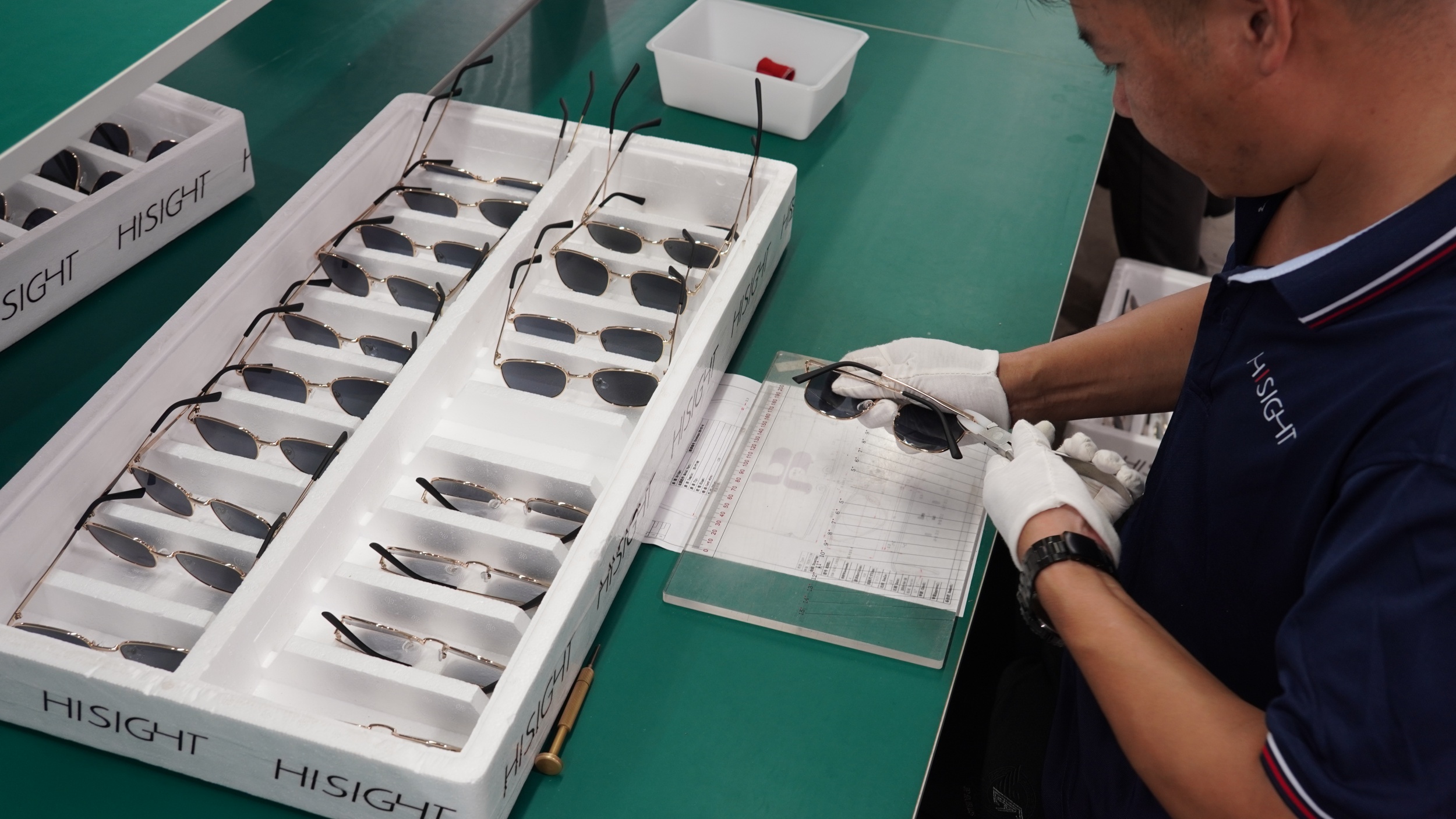
When retailers partner with eyewear manufacturers for white label glasses production, size consistency becomes a production bottleneck that separates competent suppliers from industry leaders. The challenge intensifies because eyewear requires multiple measurement points to fit diverse facial geometries, and even minor deviations create customer returns, negative reviews, and brand reputation damage. This article explores the root causes of size range gaps in private label eyewear manufacturing, examines how quality control failures amplify these issues, and provides actionable strategies to ensure your collections meet retail market expectations.
Understanding Size Range Gaps in Private Label Eyewear Production
How Size Discontinuities Emerge During Manufacturing
Size range gaps in private label eyewear typically originate from production planning misalignment between retailers and manufacturers. When brand eyewear manufacturing partners receive specifications without detailed size matrices, they often make assumptions about optimal size combinations. Instead of producing the full range a retail partner requires, manufacturers may prioritize high-volume intermediate sizes and skip extreme proportions like extra-small widths or oversized frames. This cost-cutting approach saves production time but creates inventory dead zones where customers cannot find their correct fit.
The measurement points driving eyewear complexity include frame width, bridge width, and temple length. Each dimension must be independently controlled during production, yet many eyewear odm facilities treat these as dependent variables rather than independent specifications. When a manufacturer shifts focus to fewer size variants to streamline tooling and assembly, gaps cascade across multiple dimensions simultaneously. A retailer expecting sizes from XS to XXL across multiple widths might receive only S, M, and L in wider proportions, leaving petite customers and those with narrow faces underserved.
Production Pressure and Quality Compromise
Margin pressure in eyewear manufacturing frequently drives decisions to narrow size ranges. White label glasses suppliers operating on thin margins prioritize frame models that maximize output per production line hour. Producing twenty size combinations requires twenty separate setups, quality checks, and packaging operations; producing only eight size combinations cuts complexity dramatically. Retail partners unfamiliar with manufacturing constraints may accept these limitations during initial negotiations, then face customer service issues when the collection launches without critical size options.
Quality Control Frameworks for Complete Size Matrices
Specification and Verification Protocols
Robust quality control in brand eyewear manufacturing begins before production starts, with precise size specification documentation. Retail partners must provide manufacturers with explicit size matrices showing every required combination of frame width, bridge width, and temple length, then establish inspection protocols that verify each size variant meets tolerances. Best-practice private label eyewear suppliers implement statistical sampling plans that test at least one unit from every size variant per production batch, measuring across all critical dimensions using calibrated gauge equipment.
Documentation trails become essential when managing size range complexity across eyewear odm partnerships. Quality control teams must record which size variants shipped in each production run, track measurement data by size category, and flag any dimensions approaching specification limits. When white label glasses collections reach retail distribution centers, receiving teams should verify that all contracted size combinations arrived in predicted quantities. This verification step catches production deviations before they affect store shelves and customer satisfaction.
Managing Production Variability Across Size Ranges
Different frame sizes produce different manufacturing challenges because injection molding, acetate cutting, and metal assembly processes all behave differently at extreme proportions. Smaller frames require tighter tolerances to maintain structural integrity, while larger frames demand reinforced bridge structures to prevent sagging. Quality control systems must account for these size-specific requirements by establishing differential tolerance bands based on frame dimensions. A private label eyewear manufacturer operating at industry standard should measure bridge width variance separately for XS, M, and XXL size categories rather than applying uniform tolerance bands across all sizes.
Production scheduling also influences size range completion. When eyewear odm facilities batch-produce multiple sizes sequentially rather than in parallel, quality issues in early production batches may delay or prevent later size variants from reaching the retail partner. Effective quality control requires staging plans that prioritize completing the full size matrix within agreed timelines, with contingency procedures if any size variant fails inspection. Retailers benefit from partnering with manufacturers who provide weekly production status reports tracking completion percentage for each contracted size option.
Strategic Approaches to Eliminate Collection Gaps
Pre-Production Planning and Vendor Communication
Preventing size range gaps requires deliberate communication during the design and tooling phase, before production volume begins. Retail buyers should provide white label glasses manufacturers with detailed size matrices showing the exact count of each size variant needed, not vague ranges like 'XS to XXL.' This specificity allows eyewear odm suppliers to plan tooling investments and production capacity accurately. Manufacturers responding with alternative size matrices due to cost or feasibility concerns must justify those changes with concrete reasoning, allowing retailers to make informed trade-off decisions.
Sample approval stages offer a critical checkpoint for identifying potential gaps before production. Requesting size samples across the complete intended range—not just the median sizes—allows retail teams to verify fit expectations and catch manufacturing limitations early. If a vendor suggests skipping certain size combinations because tooling complexity exceeds available budget, that conversation should occur during pre-production review, not after inventory arrives incomplete. Professional brand eyewear manufacturing partners provide transparent capacity assessments upfront, helping retailers choose designs that their production environment can deliver in full size matrices.
Ongoing Vendor Performance Monitoring
After initial production, retailers should implement performance scorecards tracking whether each private label eyewear vendor consistently delivers complete size matrices. Metrics should include the percentage of contracted sizes received in each shipment, measurement accuracy across size categories, and on-time completion of size variant production. Vendors consistently delivering 100 percent of contracted sizes deserve preferred status and higher order volumes, while those shipping incomplete matrices should face corrective action plans or replacement. This vendor discipline approach incentivizes eyewear odm suppliers to invest in quality systems that support full size range production.
Collaborative forecasting between retailers and white label glasses manufacturers reduces the risk that size range gaps emerge from inventory miscommunication. Sharing point-of-sale data showing which sizes sell fastest allows manufacturers to prioritize production sequencing, ensuring popular sizes complete first while smaller volume size variants still complete within agreed timelines. Retailers who provide six-month or twelve-month demand forecasts enable eyewear odm partners to allocate production capacity more efficiently, reducing the cost pressure that typically drives size range compromises.
FAQ
What are the most common size dimensions missing from retail private label eyewear collections?
Extreme proportions disappear most frequently: extra-small frame widths for petite customers, oversized widths for larger face shapes, and extended temple lengths for people requiring specific behind-the-ear fit. Bridge widths in specialty ranges also vanish, forcing customers to choose between frames that gap across the bridge or pinch uncomfortably. White label glasses suppliers often eliminate these extreme variants first because they represent lower-volume production runs with higher per-unit costs, but retailers lose sales when these sizes remain unavailable.
How can retailers verify that eyewear odm manufacturers deliver the contracted size matrix?
Retailers should require detailed packing lists identifying the quantity of each size variant in every shipment, then conduct receiving inspections that verify the full size matrix arrived as contracted. Sampling protocols should measure multiple units from each size category using calibrated eyewear measurement gauges. Beyond the initial delivery, tracking sell-through data by size reveals whether missing sizes created customer dissatisfaction, returns, or lost sales. Direct communication with retail customers and point-of-sale analysis provides feedback on whether any size ranges require adjustment in future production runs.
Can private label eyewear manufacturers profitably produce complete size matrices?
Yes, but complete size ranges require higher order volumes and longer production timelines than simplified matrices. Brand eyewear manufacturing partners operating at sufficient scale can justify tooling investments and production setup costs by spreading them across larger order quantities. Retailers ordering smaller volumes may need to accept limited size ranges or pay premium costs per unit. Discussing volume commitments, minimum order quantities, and production timelines during pre-production planning allows realistic expectations about what size matrix a manufacturer can deliver profitably within a retailer's budget constraints.



