
 EN
UV Test Failures in Private Label Sunglasses Lenses: Causes and Corrective Actions
Why do private label sunglasses fail UV testing? Discover root causes—from material degradation to coating defects—and proven corrective actions. Improve compliance now.
UV test failures represent one of the most critical quality challenges in manufacturing private label sunglasses. These failures occur when lens materials fail to meet required ultraviolet protection standards, exposing end consumers to harmful sun exposure and creating significant liability and compliance risks for distributors and retailers. Understanding the root causes of these failures and implementing systematic corrective actions is essential for maintaining product integrity and market reputation in the competitive custom brand sunglasses segment.
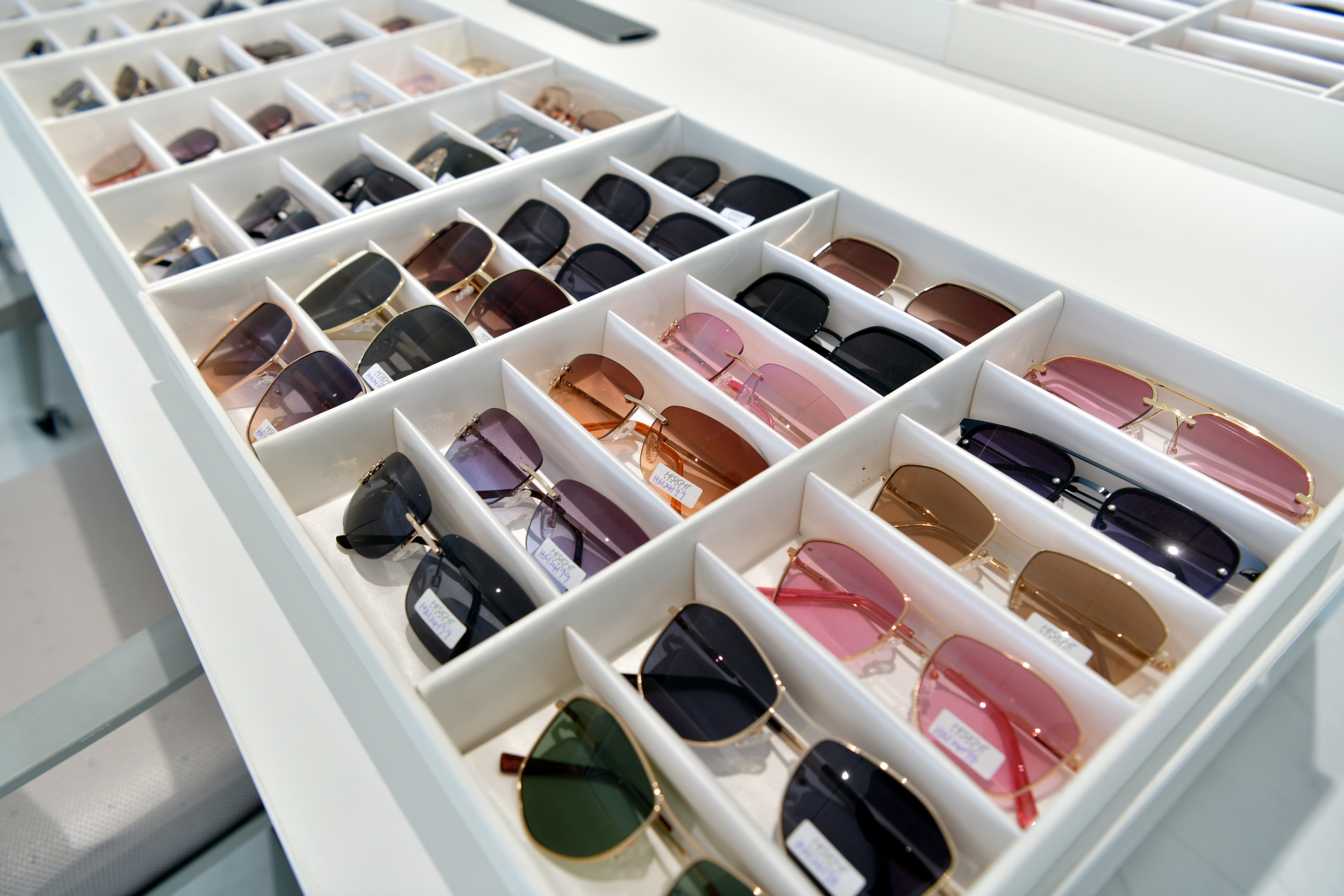
The manufacturing of custom brand sunglasses involves multiple material specifications, lens coatings, and quality control checkpoints where UV protection can become compromised. When UV test failures occur during quality assurance or post-market audits, they demand immediate investigation into material sourcing, production processes, and quality protocols. For OEM sunglasses manufacturing operations, these failures can disrupt supply chains, trigger recalls, and damage long-term business relationships with retail partners and brand owners.
Root Causes of UV Test Failures
Material Quality and Lens Composition Issues
The foundation of UV protection in private label sunglasses lies in the optical material itself. Polycarbonate, TAC (triacetate cellulose), and CR-39 lenses each have specific UV-blocking properties, but inconsistencies in raw material sourcing can introduce lenses that fail to meet UVA and UVB blocking requirements. When material suppliers introduce substandard resin batches or contaminated pellets, the resulting lenses may appear identical but lack the necessary UV absorption characteristics. Custom brand sunglasses manufacturers must verify material certifications and conduct incoming material testing on every batch.
Additive degradation during storage or transport also affects UV performance. If polycarbonate or TAC lenses are exposed to excessive heat, humidity, or sunlight before manufacturing, the UV-absorbing compounds can break down, reducing their protective effectiveness. OEM sunglasses manufacturing facilities located in tropical or humid climates face heightened risk of material degradation if warehouse conditions lack proper climate control. Temperature fluctuations between storage, production, and finished-goods facilities create additional stress on lens materials.
Coating and Treatment Process Defects
Many custom brand sunglasses incorporate anti-reflective, scratch-resistant, or hydrophobic coatings that can interfere with UV transmission if applied incorrectly. When coating thickness exceeds specifications or when solvents are not fully evaporated during curing, the coating layer itself can absorb light across wavelengths that should pass through to the UV-blocking lens substrate. Defective coating application equipment, incorrect curing temperatures, or inconsistent drying times in OEM sunglasses manufacturing create batch-level failures where entire production runs fail UV testing.
Tinting and dyeing processes also introduce risk. Some lens tinting operations use dye solutions that have inherent UV-absorbing properties that can degrade during the dyeing cycle, reducing the lens's ability to block UVA and UVB rays. If dye bath temperatures are too high or dye concentration is uncontrolled, chemical degradation of the UV protection layer can occur. Quality control teams must establish separate UV testing protocols before and after tinting to isolate coating-related failures.
Manufacturing Process and Quality Control Gaps
Inadequate In-Process Monitoring
Private label sunglasses manufacturers often rely on end-of-line UV testing as the primary quality gate, creating a reactive rather than preventive quality posture. If testing equipment is not calibrated correctly or if sampling rates are too low, defective lenses may pass through to customers before failures are detected. Custom brand sunglasses production environments with high-speed injection molding or lens grinding operations require real-time material traceability and batch-level documentation to enable rapid root-cause identification when failures occur.
OEM sunglasses manufacturing processes must implement in-process UV checks at critical control points, such as after injection molding, after tinting, and after coating application. Statistical process control methods help identify trends toward failure before entire batches are compromised. If manufacturing environments experience equipment drift, raw material changes, or seasonal environmental variations, undetected shifts in UV performance can accumulate across multiple production runs before final testing reveals the problem.
Testing Equipment and Calibration Issues
UV spectrophotometers and transmission measurement devices used to test private label sunglasses and custom brand sunglasses require regular calibration against NIST-traceable standards. If testing equipment is not properly maintained or calibrated, it may incorrectly pass lenses that actually fail UV standards, or it may falsely reject compliant lenses, causing unnecessary production losses. OEM sunglasses manufacturing facilities sharing testing resources across multiple product lines face additional complexity, as cross-contamination in optical paths or sensor drift can compromise measurement accuracy.
Environmental factors in testing labs also matter significantly. If spectrophotometer calibration references are stored near heat sources, exposed to direct sunlight, or subject to temperature swings, their optical properties can drift, leading to inaccurate results across hundreds of tested lenses. Testing frequency must match production volume, and reference standards should be replaced on schedule, not when suspected problems arise.
Implementation of Corrective Actions
Material Verification and Sourcing Protocols
Establishing robust material verification for private label sunglasses begins with developing detailed specifications for raw lens materials and demanding CERTS from suppliers confirming UV transmission properties. Each material batch received should undergo receiving inspection testing before material is released to production. Custom brand sunglasses manufacturers should maintain backup material suppliers to reduce dependency on single-source supply and create competitive pressure for quality. OEM sunglasses manufacturing operations benefit from establishing long-term partnerships with material suppliers who can provide lot-level UV performance data and maintain consistent material properties across seasons.
Storage and environmental controls become non-negotiable elements of corrective action. Climate-controlled storage facilities that maintain consistent temperature and humidity prevent UV-absorbing additives from degrading before manufacturing. Material rotation procedures following first-in-first-out (FIFO) principles ensure that older stock is used before expiration, reducing the risk of age-related UV protection loss.
Process Optimization and Equipment Maintenance
Custom brand sunglasses manufacturers must implement preventive maintenance schedules for coating equipment, tinting baths, and lens grinding machinery. Calibration intervals should be shortened during quality investigations, ensuring that any process changes are detected immediately. OEM sunglasses manufacturing facilities should conduct design-of-experiments studies on critical parameters such as coating thickness, curing temperature, and drying time to establish process windows that guarantee UV compliance.
Documentation and traceability systems enable rapid response when UV test failures occur. Batch tracking linked to material lot numbers, production dates, equipment serial numbers, and operator identifiers allows manufacturing teams to isolate the source of failures within hours rather than days. For private label sunglasses produced for multiple brand partners, detailed traceability ensures that recalls can be precisely targeted to affected customers.
Enhanced Testing and Validation Protocols
Corrective action plans must include upgraded UV testing using multiple testing methods to validate lens performance comprehensively. In addition to spectrophotometer measurements, photometer tests can measure visible light transmission alongside UV blocking, providing an independent verification. Custom brand sunglasses and OEM sunglasses manufacturing operations should conduct accelerated aging tests on sample lenses to predict UV protection durability under real-world sun exposure conditions.
Establishing statistical process control charts for UV test results allows manufacturing teams to detect upward trends in test variability before failures exceed specification limits. Monthly trend analysis and quarterly management reviews of UV testing data create organizational accountability for continuous improvement in UV protection performance.
FAQ
What are the most common UV test standards for private label sunglasses?
International standards such as ISO 12312-1 and ANSI Z80.3 define UV transmittance requirements for sunglasses. These standards typically require that both UVA and UVB transmission through the lens must not exceed specified percentages, commonly 1% for high-protection categories. Custom brand sunglasses manufacturers must comply with standards relevant to their target markets, including European EN standards and country-specific regulations. OEM sunglasses manufacturing facilities often test to multiple standards simultaneously to serve diverse distribution channels.
How frequently should UV testing equipment be recalibrated for private label sunglasses production?
Most quality systems require UV testing equipment calibration at least annually, with quarterly verification checks using reference standards. During product quality investigations or after major equipment repairs, recalibration should occur before resuming production testing. For custom brand sunglasses manufacturers processing high volumes, monthly calibration verification ensures that test equipment maintains accuracy across hundreds of daily measurements. OEM sunglasses manufacturing operations serving pharmaceutical or regulated markets may require more frequent calibration per customer contracts.
What documentation should OEM sunglasses manufacturing facilities maintain for UV test failure investigations?
Comprehensive documentation includes material certificates with UV transmission data, production batch records with equipment settings and operator identification, environmental sensor logs from manufacturing and storage areas, and complete UV test reports with individual lens measurements and testing equipment calibration records. Retention of physical sample lenses from each batch enables retesting if failures emerge post-market. Custom brand sunglasses manufacturers benefit from digital traceability systems linking all documentation to specific batch numbers, enabling rapid root-cause analysis and targeted corrective actions without disrupting the entire supply chain.



